






• Leading Spill Containment Solution
  • 10 Years of Experience Reputation
  • Rigorous Quality Guarantee
  • Worldwide Shipping
UP-3001W

PureWhite Tabletop Spill Tray

  • Bright White Base for Visibility
  • 3cm Thick Reinforced Grid
  • Chemical-Resistant LLDPE Construction
View More Details
  • High Load Capacity

    Supports up to 100 kg of labware.

  • Fast Leak Detection

    White base highlights spills instantly.
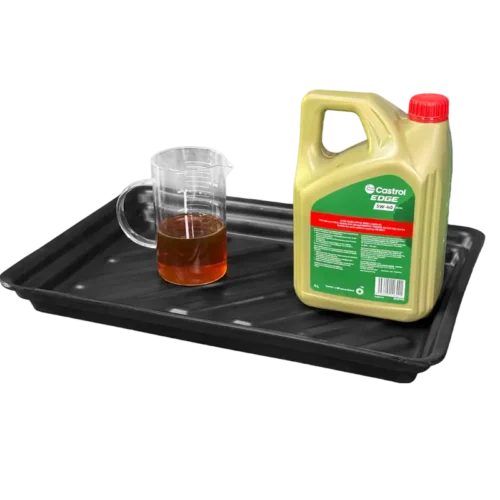
Laboratory Spill Control and Structural Stability

chemical-compatibility-test-strip-for-spill-pallet
hdpe-with-escr-180

High-Performance Containment Platform

UPQUARK PureWhite Tabletop Spill Tray (Model: UP-3001W) offers a compact, high-performance containment platform in laboratory and test stations. Its LLDPE construction ensures excellent resistance to chemical corrosion, while the bright white base allows technicians and safety staff to detect even minor leaks quickly—enabling immediate corrective action.

Stability and Compliance Support

Its 53 × 43 cm footprint fits most bench tops, and the 3cm-thick grid (the thickest on the lab tray market) offers maximum stability for sensitive labware. Whether you're storing iodine bottles, beakers, or wash bottles, this tray delivers confidence in daily lab operations while supporting regulatory compliance. Ideal for safety officers and product managers seeking reliable and compliant lab-grade spill control solutions across multi-site facilities.

Compact & Practical
53×43 cm tray fits most lab workspaces and fume hoods
3cm-Thick Reinforced Grid
Chemical Compatibility Testing Strip
Allows on-site testing of pallet resistance when dealing with unknown or uncertain liquids
Bright White Tray with Black Grate
Enhances visibility for spill detection and cleanup
Built-In 11L Sump
Captures drips and leaks to prevent surface contamination
Compliance
Ideal Applications
  • Research and development labs handling chemical liquids

  • University and institutional laboratories with safety SOP requirements

  • Industrial quality control labs needing reliable spill capture systems

  • Pharmaceutical and chemical manufacturing operations with strict cleanliness controls

  • Safety equipment suppliers and brands looking to expand lab-grade SKUs

Benefits
  • Ensures faster spill identification to reduce risk exposure

  • Non-reactive LLDPE structure allows use with a wide range of laboratory chemicals

  • Offers long-lasting performance in high-use facilities with minimal maintenance

  • Helps meet internal EHS protocols for bench-level secondary containment

Usage Notes
  • Not suitable for long-term submersion or high-heat applications

  • Clean and inspect sump regularly to maintain hygiene and capacity

  • Ensure grid is properly seated before loading labware

  • Store only compatible chemical containers—avoid highly reactive substances without prior material review

Tech Specs

Brand UPQUARK
Model UP-3001W
Dimensions L x W x H cm (in.) 53 x 43 x 11 (21x17x4.3")
Color White Tray /Black Grating
Material Linear density polyethylene (LLDPE)
Weight kg(lb) 3.8 (8.3)
Sump Capacity Liters (gal) 11 (3)
Recommend Load Capacity (UDL) kg (lb) 100 (220)
Style Containment Trays

FAQs

All faqs
What makes this tray better than standard lab trays?

It offers a 3cm-thick grid, 11L sump, and chemical-resistant LLDPE, surpassing many traditional trays in safety and durability.

Can I use this for corrosive chemicals like acids?

Yes. The LLDPE construction resists a broad range of acids, alkalis, and solvents common in laboratory work.

How do I clean up collected spills?

Use the integrated pouring spout to drain liquids safely into a disposal container.

Can this support heavier glassware or reagent bottles?

Absolutely. It has a 100 kg load capacity, more than enough for daily lab usage.

Is this product compliant with lab safety standards?

Yes. It is designed in accordance with good laboratory practices (GLP) and EPA containment guidelines.

How do I test the chemical compatibility?

The pallet includes a built-in chemical compatibility strip that allows for on-site testing when handling unknown or uncertain hazardous liquids.