What the Houston Acid Spill Taught Us About Secondary Containment
Written by

Chem Fox
Publish on 05 Feb, 2026
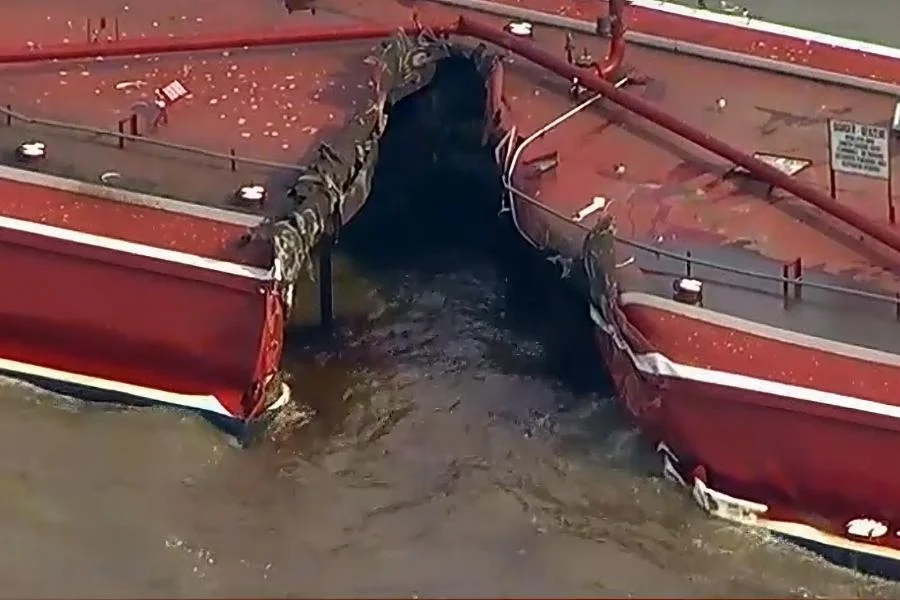
On December 27, 2025, a significant sulfuric acid spill occurred at BWC Terminals in Channelview, adjacent to Houston. This incident resulted in the release of approximately 1 million gallons of this hazardous chemical into the vicinity of the Houston Ship Channel. Emergency response personnel promptly initiated containment protocols, implemented remediation strategies, and took measures to mitigate environmental and public health hazards.
Ultimately, the spill caused substantial disruption to local communities, inflicted harm on aquatic ecosystems in nearby waterways, and necessitated costly cleanup and remediation efforts.
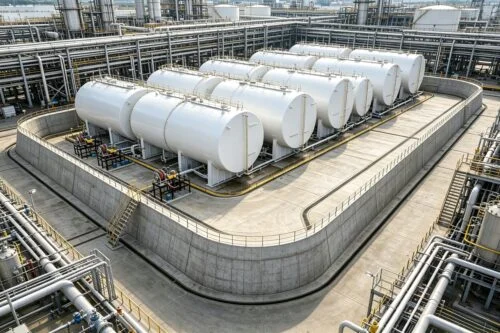
This event underscores that a secondary containment system (SCS) is not merely a regulatory compliance requirement—it is the critical safeguard distinguishing a manageable industrial incident from a catastrophic environmental disaster.(For information about what is a secondary containment system, please refer to our previous articles: "Secondary Containment 101")
The Incident Analyzed: When Structure Fails
Primary Containment Failure:
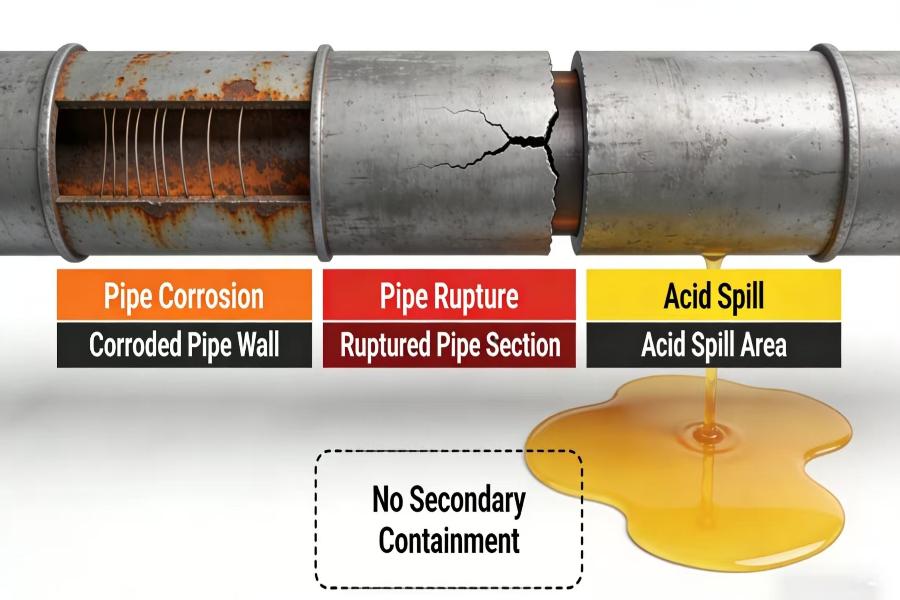
- Spill source: Corroded pipe connected to a large storage tank; Inadequate pipe maintenance and sufficient secondary containment permitted unimpeded migration of the acid.
- On-site Defense Measures : Emergency response teams take action to contain advancing acid and prevent its full infiltration into the Houston Ship Channel. Additionally, acid neutralization procedures were implemented to reduce its corrosive effects in soil and ground water.
The High Cost of Containment Failure
| Incident / Scenario | Primary Chemical | Containment Status | Estimated Financial Loss / Impact |
| BWC Terminals (2025) – Houston, TX | Sulfuric Acid (H₂SO₄) | Partially Effective | $120+ million (cleanup, remediation, regulatory fines, and lost productivity) |
| LyondellBasell (2021) – La Porte, TX | Acetic Acid (CH₃COOH) | Failed/Bypassed | $40 million (fines, legal fees, and remediation) + 1 fatality |
| Deepwater Horizon (2010) – Gulf of Mexico | Crude Oil | None (Offshore Blowout) | $65+ billion (cleanup, compensation, and environmental remediation) + 11 fatalities |
Regulatory Requirements and Compliance
BWC Terminals spill illustrate the importance to follow secondary containment regulation under Occupational Safety and Health Administration (OSHA) and the Environmental Protection Agency (EPA):
EPA SPCC Rule:
- Requires containment to hold 100% of the largest tank + precipitation (often cited as 110%).
- Facilities are required to conduct periodic inspections and preventive maintenance of both primary and secondary containment structures
- Emergency response plans must incorporate specific protocols for secondary containment breaches, and personnel must receive competency-based training
OSHA 1910.120(29 CFR 1910.120)
- Scope: Covers clean-up at uncontrolled hazardous waste sites, corrective actions (RCRA), voluntary clean-ups, and emergency responses.
- Safety & Health Plan (b): Employers must develop a written program for site hazards, including PPE, training, and medical surveillance.
- Training (e): Workers must receive training tailored to their role (e.g., 40-hour for site workers, 24-hour for occasional, 8-hour refresher).
- Medical Surveillance (f): Required for workers exposed to hazardous substances above PELs or wearing respirators.
- Decontamination (k): Procedures must be in place for personnel and equipment to prevent contamination spread.
- Emergency Response (q): Covers procedures for handling hazardous substance releases, including evacuation, reporting, and training for emergency responders.
A critical industry insight: “Containment is far more cost-effective than remediation”
The capital and operational expense of installing and maintaining a robust secondary containment system constitutes a small fraction of the financial losses, legal liabilities, and environmental damage incurred in the event of a hazardous chemical spill.
Strengthening Your "Last Line of Defense" with UPQRK
The Houston sulfuric acid spill serves as a stark industry reminder that secondary containment represents a facility’s final line of defense against catastrophic hazardous chemical releases.
Facility managers and safety professionals can implement effective containment measures—across both large and small scales—by adhering to the following best practices.
- Conduct a comprehensive hazard assessment of high-risk areas: Identify storage tanks, piping, valves, and transfer points where hazardous chemicals are stored or transported, and evaluate the adequacy of existing secondary containment systems against industry standards.
- Invest in durable, chemically compatible containment solutions: Select SCS products engineered to withstand the corrosive properties of the specific chemicals in use and the operational demands of the facility, ensuring long-term reliability.
- Establish and implement a formal preventive maintenance program: Inspect containment systems on a monthly basis for signs of wear, corrosion, or structural damage, and address identified deficiencies immediately to maintain operational integrity.
UPQRK offers a comprehensive range of secondary containment products designed to enhance facility safety, ensure regulatory compliance, and mitigate spill risks, including:
- Drum Spill Pallets: Suitable for small-to-medium hazardous chemical storage in drums, these pallets provide secure secondary containment to prevent leakage and subsequent migration of hazardous materials.
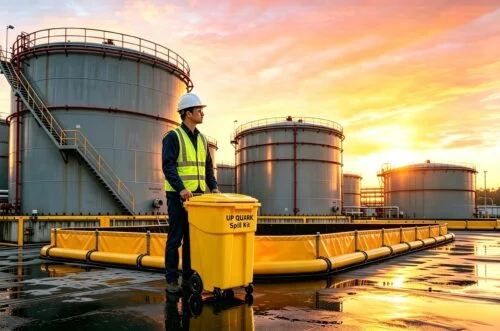
- Flexible Spill Containment: Optimized for large or irregularly shaped areas—such as those surrounding piping or storage tanks—this flexible solution can be customized to meet the unique operational requirements of individual facilities.
In Conclusion
The 2025 Houston sulfuric acid spill was a preventable incident that highlighted the life-critical importance of robust secondary containment systems. Beyond being a regulatory obligation, SCS implementation is a strategic investment in protecting facility infrastructure, safeguarding local communities, and preserving the environment.
Don't wait until a crisis breaks out to test your preparedness. Audit your leak containment capabilities today!
References
1.”Sulfuric Acid Leak at BWC Near Channelview Releases 1M Gallons”
2.”CSB Final Report on LyondellBasell Fatal Acetic Acid Release”
3.”The Financial Cost of Oil Spills”
4.”OSHA Chemical Spill Prevention vs. Containment”
Prev Post

Secondary Containment 101