Why Green Infrastructure Still Needs Spill Control
Written by

Chem Fox
Publish on 15 Feb, 2026
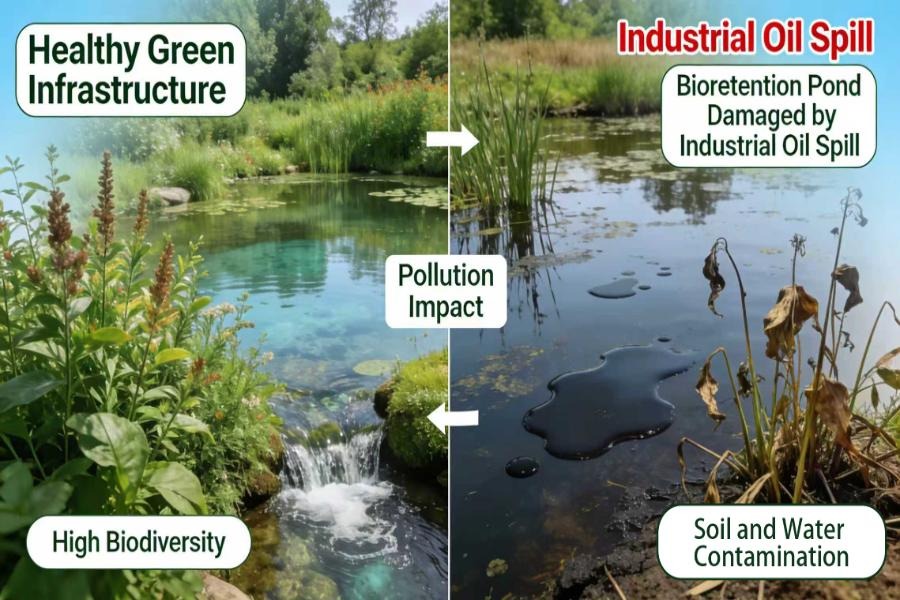
Green infrastructure (GI) has rapidly established itself as the preferred solution for stormwater runoff management in industrial, commercial, and municipal settings. Characterized by its sustainability, environmental benignity, and engineered natural filtration capabilities, GI nonetheless requires robust spill control measures to maintain its long-term utility.
The core rationale is unambiguous: A single industrial accident can kill the biology in a green infrastructure, turning a filtration asset into a toxic waste site.
Passive filtration mechanisms alone are insufficient to mitigate such risks. To safeguard the structural integrity and operational functionality of GI over its service life, the implementation of active “source control” measures is not merely advisable—it is imperative.
The Vulnerability of Bioretention Systems to Industrial Pollutants
Bioretention systems—encompassing rain gardens, bioretention ponds, and related vegetated filtration features—serve as the cornerstone of most modern green infrastructure initiatives. Despite their proven efficacy in managing conventional stormwater contaminants, these systems are significantly more delicate than their aesthetic appearance suggests, particularly when exposed to industrial-grade pollutants.
- Biological Limits: Indeed plants and microorganisms within bioretention systems effectively filter common stormwater while they are incapable of decomposing heavy oils, corrosive chemicals, or hazardous industrial waste. Such substances will cause degradation or complete loss of the biological mechanisms that underpin GI’s filtration functionality.
- “Clogging” Effect: Heavy oil and sludge derived from industrial spills can rapidly clog the porous soil matrix and vegetative root zones of bioretention systems. This obstruction disrupts normal hydrologic flow, precipitates flooding events, and forces stormwater to bypass the system entirely
- Groundwater Risk: Pollutants that bypass or damage bioretention systems are not confined to the surface environment. Instead, these contaminants infiltrate groundwater reserves, compromising drinking water sources and inflicting long-term, cumulative harm on local ecosystems—even after the initial spill has been formally remediated.
The High Cost of Pollution: Prevention vs. Remediation
For facility managers and environmental stewards, proactive spill prevention is demonstrably more cost-effective than reactive cleanup and remediation.
| Cost Category | Prevention | Remediation | Impact Level |
|---|---|---|---|
| Asset Cost | Low (investment in source control products such as drain spill covers) | High (full replacement or restoration of damaged bioretention systems) | Severe (permanent asset loss possible) |
| Vegetation | Minimal (no damage to existing plants or microorganisms) | Extremely High (replanting, soil amendment, and microbial restoration required) | Long-Term (ecosystem recovery requires multiple years) |
| Downtime | None (source control operations do not disrupt GI functionality) | Significant (GI systems are non-functional during remediation efforts) | Moderate to Severe (stormwater runoff remains unfiltered during downtime) |
| Fines | None (compliance with applicable environmental regulations) | Steep (penalties for groundwater or ecosystem contamination) | Severe (legal and financial liability for affected facilities) |
The Solution: Implementing Active Source Control
Passive filtration systems are inherently ineffective in intercepting hazardous pollutants while active source control represents the only reliable method to ensure zero discharge of harmful contaminants into GI systems. For facility managers seeking to implement this strategy, a step-by-step framework is outlined below:
What is Source Control?
Source control is a proactive pollution prevention strategy focused on blocking industrial spills, process runoff, and hazardous materials from entering stormwater collection systems
How to Implement It
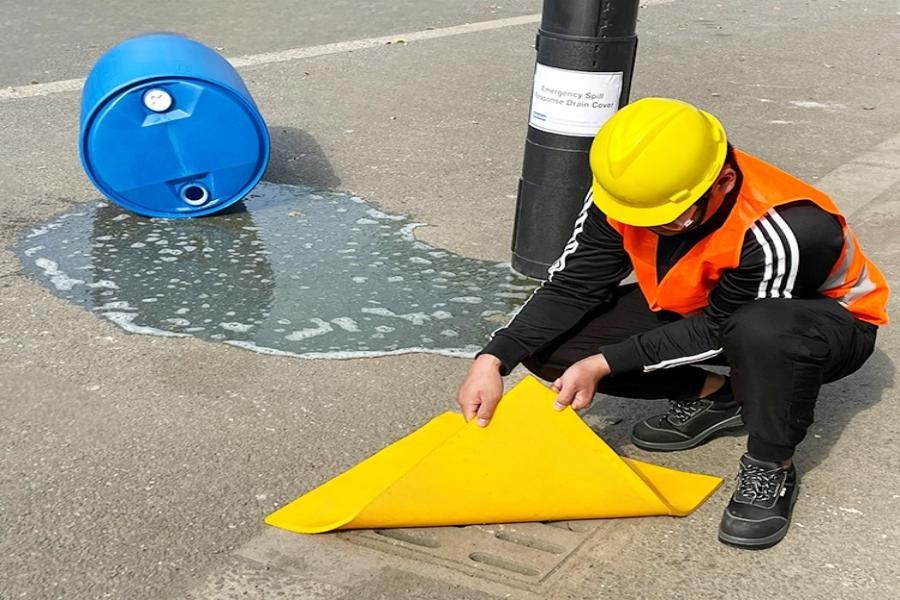
The primary implement for effective source control is drain spill covers. These purpose-built devices provide instant, secure sealing of storm drains in the event of a spill, thereby preventing pollutants from migrating to bioretention systems or local waterways.
Product Spotlight
Upquark drain spill covers are specifically engineered for industrial environments, with design features that ensure reliability, durability, and ease of deployment for facility staff, including:
- Polyurethane (PU) Construction: Engineered for durability, chemical resistance, and compatibility with harsh industrial conditions, ensuring long-term performance.
- Reusability: Designed to be cleaned and reused following a spill event, reducing long-term operational costs and environmental waste.
- High-Speed (Instant Drain Sealing): Activates rapidly to contain spills before they spread, minimizing potential damage to GI systems and reducing remediation requirements.
How It Protects Green Infrastructure
Drain spill cover is a straightforward, cost-effective proactive measure.
During a spill event, Drain spill covers build an impermeable seal and stick to ground tightly to prevent industrial pollutants from reaching bioretention systems. This protection preserves the health of the soil matrix, vegetative cover, and microbial communities, ensuring that GI systems continue to filter stormwater efficiently and comply with environmental regulations.
Best Practices for Facility Managers
The successful implementation of source control is not a one-time task; it requires ongoing commitment, regular maintenance, and staff training. Facility managers can effectively protect their green infrastructure assets by adhering to the following industry best practices:
- Standard Operating Procedures (SOPs): Develop comprehensive, facility-specific SOPs for spill response, including detailed, step-by-step guidelines for the rapid deployment of drain spill covers. Conduct regular staff training and drills to ensure proficiency in the use of such equipment, minimizing response time during an emergency.
- Maintenance: Perform scheduled inspections of drain spill covers to ensure they remain in optimal operational condition. Clean all equipment thoroughly following use, and replace any damaged components promptly to prevent operational failures during critical spill events.
- Storage: Store drain spill covers in clearly marked, easily accessible locations proximate to storm drains and high-risk spill areas. This ensures that staff can deploy the equipment rapidly in the event of a spill, minimizing the potential for pollutant migration to GI systems.
Frequently Asked Questions
- Can rain gardens filter oil spills?
No. Rain gardens and other bioretention systems rely on biological processes (plants and microorganisms) to filter contaminants; however, these processes are unable to decompose heavy oils or hazardous chemicals. Oil spills will result in the mortality of biological life within the rain garden, contaminate the soil matrix, and render the system permanently non-functional without extensive remediation. - How do I choose the right size drain spill cover?
Select a drain spill cover that corresponds to the exact dimensions of the storm drain in question. Prior to purchase, measure the diameter of the drain opening, and prioritize covers that are adjustable or available in multiple sizes to accommodate the various drain configurations (e.g., round, rectangular) within a facility. - Are drain spill covers chemical resistant to corrosive chemicals?
Yes, provided that the appropriate material is selected for the facility’s specific hazards. Upquark drain spill covers are constructed from polyurethane (PU), which exhibits inherent resistance to most corrosive chemicals, oils, and solvents commonly encountered in industrial settings. It is recommended that facility managers review product specifications to ensure compatibility with the specific chemicals present at their
In Conclusion
Green infrastructure is a critical, cost-effective tool for stormwater runoff management, but it is not impervious to damage from industrial spills. Industrial contaminants can destroy GI systems in a short period, and passive filtration mechanisms are inadequate to mitigate the risks posed by such hazards. For facility managers and environmental stakeholders, the only effective method to protect green infrastructure investments is the implementation of active source control—specifically, the use of purpose-built drain spill covers to stop spills at their source.
The cost of proactive prevention is minimal when compared to the substantial expenses associated with remediation, regulatory fines, and permanent asset loss. By adhering to industry best practices and utilizing reliable, industrial-grade products such as Upquark drain spill covers, facility managers can ensure that their green infrastructure remains a functional, sustainable, and compliant asset for the long term.
References