Secondary Containment 101
Written by

Chem Fox
Publish on 20 Jan, 2026

Industrial liquid is widely used in docks , factories, warehouses etc… There are daily operations such as liquid discharging , refilling and moving . During the operation leakage or spill happens timely so it is important to contain these liquids to prevent liquid spreading and pollution.
What is Secondary Containment
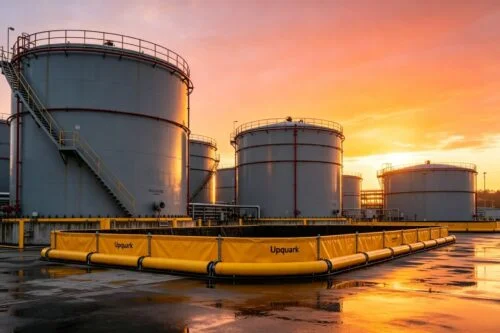
Secondary containment is a specialized safety system designed to capture spills, leaks, or discharges from primary storage before they spread, protecting the environment and human health. It serves as a "backup plan": if a corrosive chemical drum leaks, an oil tank ruptures, or a pesticide barrel tips, the system traps the liquid, preventing soil/groundwater contamination and workplace slips.
Evolution of the Concept
Secondary containment has evolved significantly, driven by growing environmental awareness, high-profile disasters, and stricter regulations. Mid-20th century industrialization led to widespread chemical use, with spills seen as an unavoidable cost; containment relied on makeshift barriers like sandbags, causing severe harm to ecosystems and workers.
- In 1976, U.S Environmental Protection Agency (EPA) Resource Conservation and Recovery Act (RCRA) mandated secondary containment for hazardous waste storage.
- In 1981, EPA 40CFR 264.175 specifies the container capacity and EPA 40 CFR 122.26 regulated facilities must have a plan to handle storm water discharging to prevent illegal pollutants flowing into waterways.
- In Europe, Control of Pollution (Oil Storage) (England) Regulations 2001 required to provide more secure containment facilities for tanks, drums, Intermediate Bulk Containers (IBCs) and mobile bowsers to prevent oil escaping into the environment.
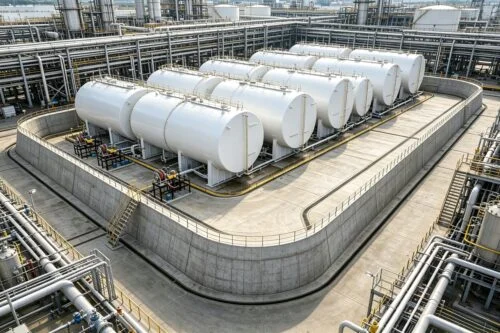
- DEFRA Oil Storage Regulations 2001 specifies bund’s capacity no less than 110% of largest container loaded or 25% of the aggregate total capacity of the containers,whichever is the greater. As the bund will contain no gravity outlet or drain.
- UK PPG 26 (Pollution Prevention Guideline 26) in 2011 focuses on storing and handling drums and Intermediate Bulk Containers (IBCs) to prevent pollution.
Purpose & Key Benefits
Adopting secondary containment delivers four tangible benefits, extending beyond compliance to long-term sustainability, safety, and financial stability.
- It protects the environment. Hazardous liquids (chemicals, oils, pesticides) can devastate ecosystems—petroleum spills contaminate soil, kill aquatic life, and damage drinking water sources. Systems like drum spill pallets with seamless sumps contain spills, minimizing harm and cleanup costs, while enhancing a business’s corporate social responsibility (CSR) reputation.
- It ensures regulatory compliance. Governments worldwide enforce strict rules; non-compliance risks fines, legal action, or operational suspension. U.S. EPA 40 CFR 264.175 (hazardous waste) and SPCC 40 CFR 112.7 (oil storage) and UK PPG26 mandate containment, making compliant systems essential for maintaining licenses.
- It reduces business costs. While initial investment is significant, it pales next to spill-related expenses—oil cleanup can exceed $10,000 per gallon, plus legal fees and downtime losses. Systems like absorbent pads quickly contain small spills, minimizing cleanup and resuming operations fast, with long-term savings outweighing maintenance costs.
- It safeguards workers. Spills cause slips, chemical exposure, skin irritation, and burns. Containment systems isolate spills from work areas; drum spill pallets with high-visibility designs and safety features (forklift pockets, steel grating) reduce handling accidents, lowering injuries, workers’ compensation costs, and boosting morale.
Types of Secondary Containment
Secondary containment systems are tailored to industry, application, and liquid type, falling into three main categories: active, passive, and portable. Choosing the right one depends on the stored liquid, container volume, usage frequency, and facility layout.
Active System
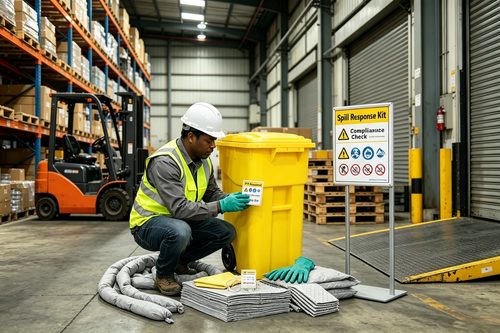
Active systems respond to spills post-occurrence, requiring manual/automatic intervention—ideal for infrequent, unpredictable spills where quick action is critical. A common example is absorbent pads , spill kits , which are widely used for fast industrial spill cleanup.
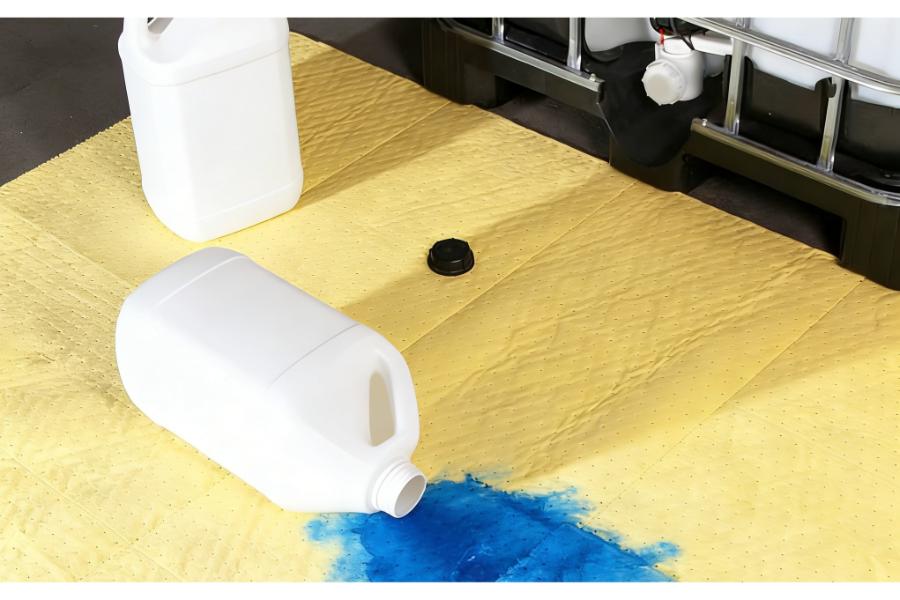
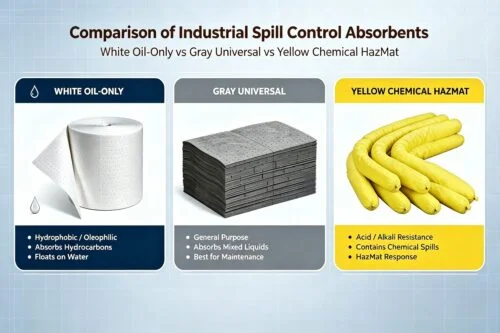
Absorbent Pads:
- Material: High-quality, highly absorbent polypropylene
- Feature: Catch up liquid weights up to 18 times of their own weight.
- Purpose: Clean up oil and chemical spills quickly and effectively
- Application: Factories, workshops, laboratories, etc…
- Size: 40x50 cm pads, 40x5000 cm rolls and can be customized
Spill Kits:
- Composure: Absorbent, PPEs, disposal bags and tools
- Function: Quick response to spill.
- Application: Factories, workshops, laboratories, etc…
- Size: Can be packed in handbag or dust bin
Key Benefits:
- Fast cleanup: Catch up leaked liquid in minutes, preventing reactions or harmful fumes.
- High capacity: Industrial-grade pads absorb up to 12x their weight, handling small to large spills.
- Versatility: Compatible with diverse liquids and settings; specialized options (e.g., oil-only) suit specific needs.
- Easy use/disposal: No complex installation, compact storage, and safe disposal per regulations.
Application Scenarios:
When a solvent drum leakage happens , it can be contained by on-site absorbent pads, with cleanup completed in 30 minutes and no downtime or environmental harm.
Passive System
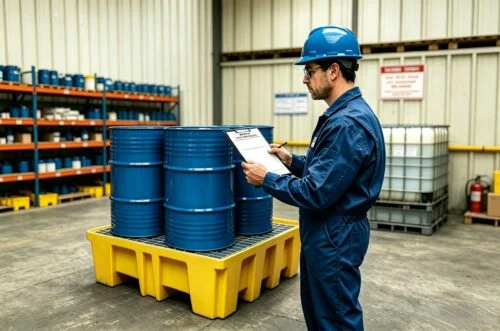
Passive systems are always in place, containing spills instantly without intervention-ideal for long-term liquid storage (gradual leaks from corrosion). The most common type is drum spill pallet and IBC tank spill pallets, engineered for 55-gallon drums and larger containers. They configure 1-10 drums, suiting facilities of all sizes. The Leak-proof design sumps eliminate escape points, which is critical for corrosive liquids. Such product could be made of resin or steel depending on different liquid to store:

Resin Spill Containment Pallet:
- Material: High-density polyethylene (HDPE) injection or Low-density polyethylene (LDPE) rotary molding.
- Feature: UV and are corrosion-resistant against most chemicals
- Purpose: Oil/Chemical container storage and spill containment
- Application: Factories, workshops, laboratories, etc…
Steel Spill Containment Pallet:
- Material: Sturdy and powder coated steel
- Purpose: Heavy duty, fire-resistant or hazardous liquid storage and containment
- Application: Chemical industries and flaming sensitive lines
- Optional: resin base + steel grating spill pallet to meet regulation compliance as well as economical solution
Application Scenarios:
One chemical distribution center’s HDPE drum spill pallets capture a sulfuric acid leak, enabling safe repair without environmental damage or regulatory fines.
Portable Solutions
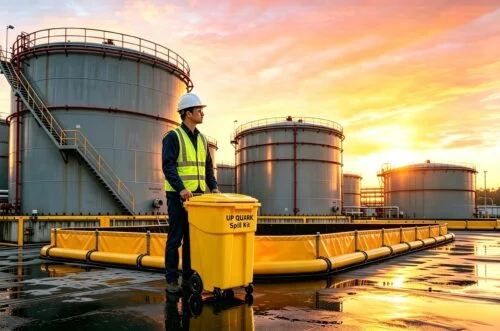
Portable systems are lightweight, easy to set up/disassemble, and transportable- ideal for temporary/mobile use (construction sites, agricultural operations, temporary storage). It includes but is not limited to Spill containment berm, Drain cover seal, Hazmat pools, etc…
Spill Containment Berms:
- Material: Polyvinyl chloride(PVC)
- Feature: Flexible and portable; Tool-free assembly in minutes, suitable for emergencies or temporary projects
- Purpose: Capture leaks or spills from containers, vehicles, or equipment storing or transporting hazardous liquids, helping ensure regulatory compliance and environmental protection
- Application: Spill containment berms work by creating a low-lying, enclosed area (a basin) where you place your equipment (like fuel tanks or trucks).They have raised edges (curbs) that prevent the liquid from flowing out while building a sealed bottom that prevents the liquid from seeping into the ground.
Drain Cover Seals:
- Material: Polyurethane
- Feature: Portable, resistant to a wide range of liquids.;Tool-free assembly in minutes, suitable for emergencies or temporary projects
- Purpose: Prevent the polluted water flowing into the manhole to avoid leaking spreading.
- Application: Construction, storage and agriculture
Application Scenarios:
A construction crew’s portable containment berm contains a diesel hose leak at a remote site, allowing quick cleanup and easy relocation of the berm afterward.
When is Secondary Containment Required
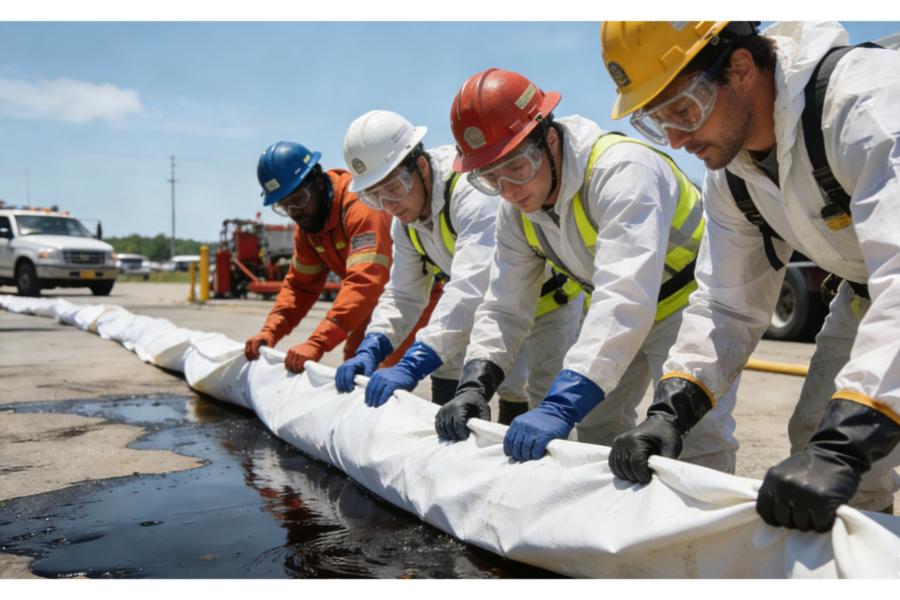
Secondary containment is critical to prevent hazardous material, chemical, or oil spills from contaminating the environment, endangering health, or causing damage. Regulated by OSHA and EPA, it is mandatory when hazardous leaks pose risks, acting as a backup if primary containment (e.g., tanks) fails.
Secondary Containment Requirements
Core requirements focus on effective spill confinement without environmental leakage. Key requirements by substance:
- Hazardous Materials: Systems must be compatible with stored substances, durable (no leaks), and sized for maximum potential spills.
- Chemicals: Corrosive/toxic/flammable chemicals need corrosion-resistant containment (e.g., HDPE). Systems must be sealed, ventilated if needed, and OSHA/EPA-compliant (labeling, protocols).
- Oils: Impermeable containment prevents soil/groundwater contamination; may use polypropylene pads. EPA’s SPCC rule mandates oil storage/containment standards.
Secondary Containment Application Scenarios
Secondary containment is used in spill-prone scenarios, especially with hazardous substances. Common applications:
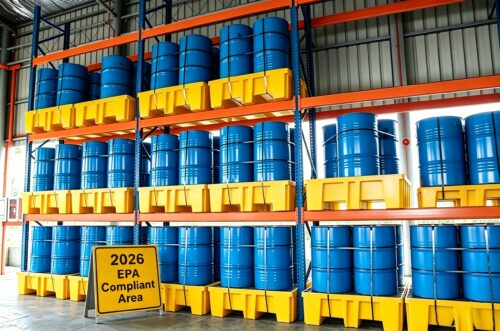
- Hazardous material/chemical storage (warehouses, tank farms) with containment structures (bunds, trays).
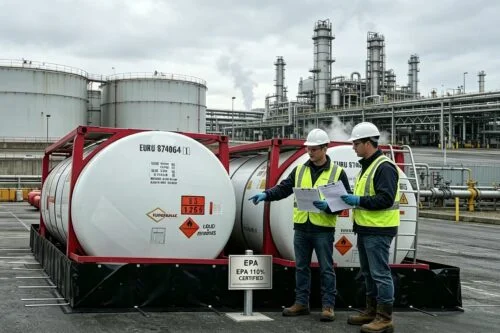
- Industrial facilities (chemical plants, refineries); e.g., power plant transformer areas with oil containment pits.
- Laboratories, with containment trays under chemical storage/equipment.
- Waste facilities (hazardous waste) with strict anti-seepage (permeability ≤1×10⁻⁷ cm/s).
- Transport/loading zones, using temporary measures (portable bunds, absorbent pads).
What Industries Need Secondary Containment
As we discussed earlier in this article, Secondary containment is compulsory to ensure law and regulation compliance such as EPA (SPCC), IFC/UFC, OSHA, DEFRA Oil Storage Regulations 2001, UK PPG26, etc..
- It is widely applied in industries handling/storing/transporting hazardous materials, oils, or chemicals (high spill risks) including but not limited to:
- Chemical
- Pharmaceutical manufacturing,
- Petroleum and Oil Refineries, terminals
- Gas stations
- Automotive and metal processing with lubricants/coolants/chemicals
- Waste Management Industry
- Power Generation Industry
- Laboratories…
And all these industries are regulated by key frameworks for compliance.
In Conclusion
Secondary containment should be a proactive strategy rather than a reactive fix! It is about accountability – no matter storing chemicals, fuels, or pesticides, the right system makes a critical difference. Choosing compliant, high-quality products and integrating containment into daily safety routines protects key assets and builds a sustainable future.
References:
1.”EPA: Resource Conservation and Recovery Act (RCRA) Overview”
3.”DEFRA: The Control of Pollution (Oil Storage) (England) Regulations 2001”
4.”NIEA: Pollution Prevention Guidance 26 (PPG 26)”
5.”EPA: SPCC Secondary Containment Requirements”