Sized Secondary Containment vs. General Secondary Containment: What’s Appropriate for Your Facility?
Written by

Chem Fox
Publish on 14 Mar, 2026
For facility managers who have reviewed our “Secondary Containment 101” guide, the fundamental principles of secondary containment are already well understood. Secondary containment systems(active, passive, or portable) are universally recognized as indispensable for mitigating oil spill risks and safeguarding environmental integrity. A critical next step for all facility management teams is the accurate determination of the appropriate capacity for their containment systems.
Selecting an incorrect size or type of containment system is not a trivial oversight; it can result in costly spill incidents, regulatory sanctions, and significant environmental degradation that may have long-term impacts.
The 1988 Ashland Petroleum spill stands as a stark reminder of these risks. Insufficient secondary containment measures led to the leakage of millions of gallons of oil into adjacent waterways, inflicting long-term ecological harm and imposing substantial cleanup costs.
The EPA SPCC rule for secondary containment to avoid financial penalties and potential legal liabilities. The aggregate aboveground storage capacity of the facility is 1,320 U.S. gallons or less of oil. For the purposes of this exemption, only containers with a capacity of 55 U.S. gallons or greater are counted.
This article will briefly outline the two main regulatory categories required by the EPA: general secondary containment and size (specific) secondary containment . So the plant safety manager can choose the most suitable option for their unique operational needs.
What is General Secondary Containment?
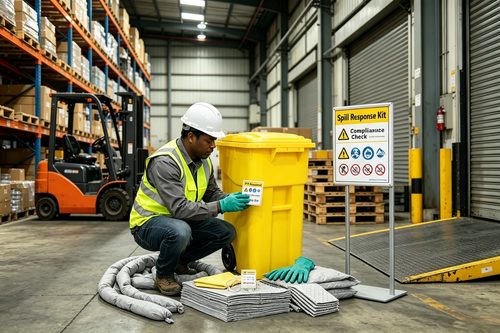
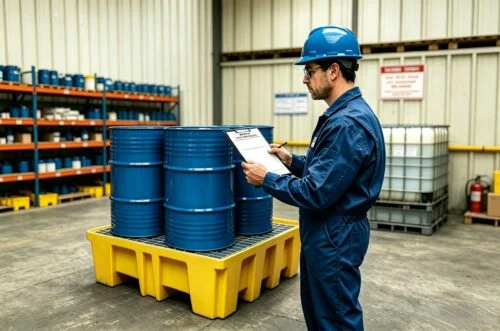
General secondary containment is specifically engineered to capture small, accidental leaks and drips from equipment. This type of containment system addresses the risk of minor spills that might otherwise infiltrate soil or water sources, preventing adverse impacts on surrounding ecosystems.
Typical applications include:
- Mobile oil transfer stations
- Small-volume storage containers
- Equipment that requires frequent relocation—scenarios where the potential for large spills is minimal.
Applicable Scenarios:
This containment type is most appropriate for small-scale operations or equipment with a low risk of spillage.
Common Equipment:
- Drip pans (commonly deployed beneath mobile transfer stations to capture minor leaks and prevent small-scale contamination)
- Small containment trays designed for low-volume equipment, ideal for capturing drips during routine operations
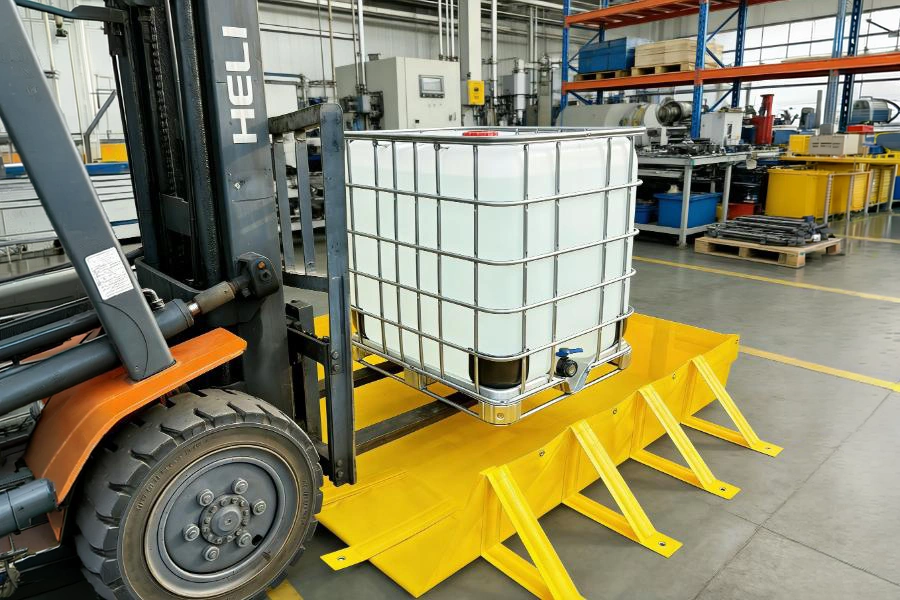
- Portable spill berms specifically engineered for small-scale equipment and temporary storage, offering flexibility for dynamic work environments

What is Sized (Specific) Secondary Containment?
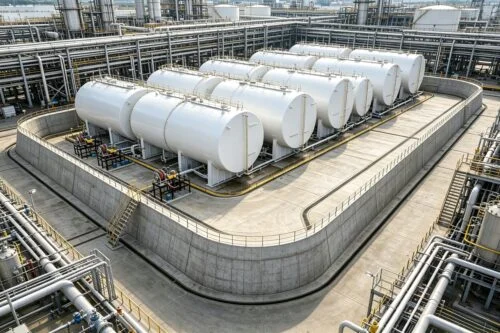
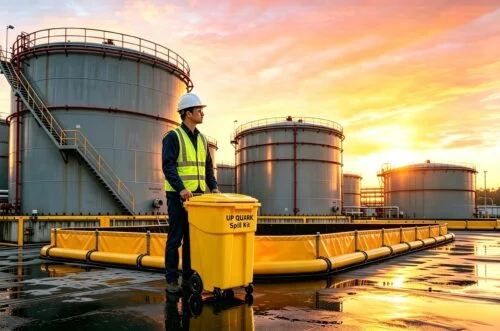
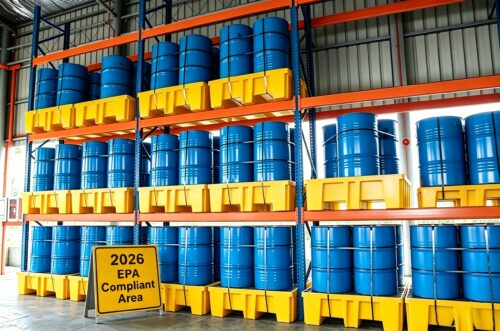
Sized secondary containment is engineered to accommodate larger spill events—specifically, the maximum potential spill volume from a single container or a grouping of containers within a designated area. It is to prevent spill incidents, EPA SPCC regulations violation and operation disruption.
Applicable Scenarios:
- Large industrial equipment
- Bulk storage tanks
- Facilities that handle substantial volumes of oil or hazardous liquids.
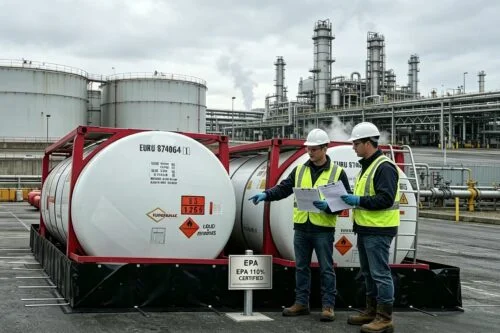
It is particularly critical for above ground bulk oil storage tanks, which present an elevated risk of large-scale spills due to their size, storage capacity, and operational demands.
Size & Data Rules (in accordance with EPA SPCC guidelines):
- For a single container: Containment capacity must be no less than 110% of the container’s total holding capacity to ensure adequate coverage of potential full spills, a key requirement for EPA compliance.
- For multiple containers: Containment capacity must be at least 110% of the largest container’s capacity, or 10% of the total capacity of all containers within the same containment area—whichever value is greater, per EPA SPCC mandates.
- Containment systems must be compatible with the stored liquid (e.g., resistant to corrosion caused by oil, chemicals, or other hazardous substances) to maintain structural integrity and prevent system failure.
General vs. Sized Secondary Containment: A Quick Comparison
| Feature | General Secondary Containment | Sized (Specific) Secondary Containment |
| Regulatory Basis | 40 CFR §112.7(c) | 40 CFR §112.8(c)(2) |
| Design Goal | Capture small leaks and drips; mitigate risks associated with minor contamination | Contain maximum potential spills; prevent significant environmental harm and regulatory non-compliance |
| Capacity Requirement | No stringent size regulations (focused on mitigating small spill events and minor leakage) | 110% of single container capacity, or 10% of total multiple container capacity (whichever is larger), per EPA SPCC mandates |
| Equipment Types | Drip pans, small containment trays, and portable small-scale berms (primarily passive/portable systems) | Large-scale berms, permanent containment structures, and active/passive systems (permanent/passive/active configurations) |
How to Determine What Your Facility Needs
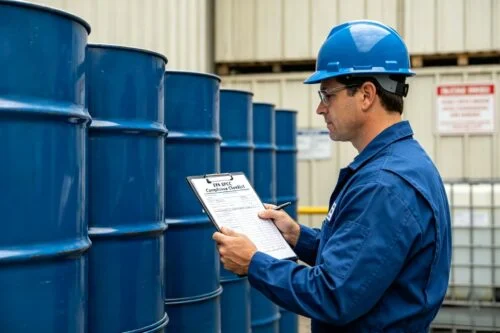
Facility managers can utilize the following audit checklist to select the appropriate secondary containment system for their operations, ensuring compliance with EPA SPCC regulations and effective risk mitigation—key objectives for any facility management team:
- Calculate Total Capacity: Compute the total volume of oil or hazardous liquids stored at the facility, and document the capacity of each individual container to establish a clear baseline for containment requirements.
- Identify Container Types: Determine whether the facility utilizes small, mobile containers or large, fixed bulk tanks. Smaller containers may only require general containment, whereas bulk tanks and high-volume storage necessitate sized containment to meet EPA SPCC regulatory standards.
- Assess Environmental Factors: Facilities located near waterways, wetlands, or other sensitive ecosystems are subject to more rigorous regulatory requirements—sized containment may be necessary even for smaller storage volumes to minimize environmental risk and ensure compliance.
- Review Containment Materials: Verify that the containment system is compatible with the stored liquids (e.g., oil-resistant materials for petroleum-based products) to ensure structural durability, prevent system failure, and maintain long-term effectiveness.
In Conclusion
The selection between general and sized secondary containment systems depends on the facility’s operational scale, the volume of liquids stored, and compliance with EPA SPCC regulations—all critical considerations for facility managers.
General containment is well-suited for addressing small, low-risk spills and minor leakage, while sized containment is mandatory for large-scale bulk storage and high-risk operations. By adhering to the provided audit checklist and maintaining a comprehensive understanding of applicable regulatory requirements, facility managers can effectively protect their operations, preserve environmental integrity, and avoid costly penalties associated with non-compliance.
References
1.U.S. EPA: Secondary Containment for Each Container under SPCC.
2.U.S. EPA: Chapter 4 Secondary Containment and Impracticability.
3.eCFR: 40 CFR Part 112 - Oil Pollution Prevention. 4.U.S. EPA: SPCC Rule Amendments for Mobile Refuelers.