A 10-Point Inspection Checklist for Your Secondary Containment System
Written by

Chem Fox
Publish on 20 Apr, 2026
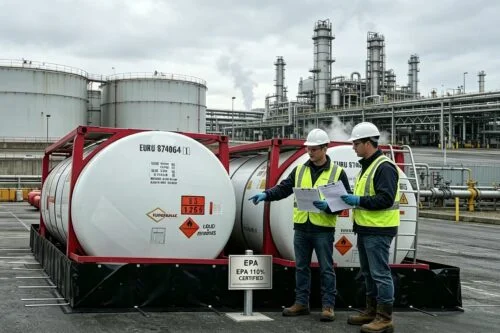
The financial and environmental consequences of secondary containment system failure are substantial. As illustrated by the 2025 Houston sulfuric acid spill: a corroded pipe and inadequate containment measures resulted in:
- Release of approximately 1 million gallons of toxic chemicals
- Over $120 million in cleanup costs, regulatory fines, and productivity losses.
- Significant harm to local aquatic ecosystems and disruption to surrounding communities.
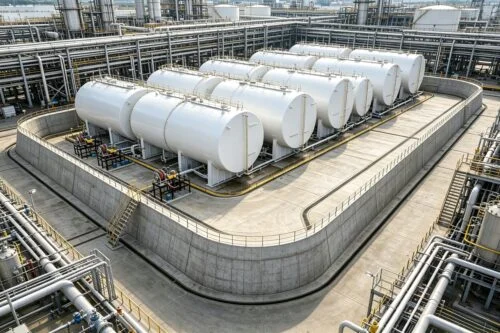
Secondary containment systems (SCS) serve as the final line of defense against hazardous material spills in industrial facilities. EPA and SPCC regulated mandatory routine inspections are essential to maintaining the operational integrity of SCS, safeguarding personnel safety, protecting the environment, and preserving organizational financial stability.
This 10-point checklist provides a systematic, step-by-step framework for conducting comprehensive inspections of secondary containment systems.
The 10-Point Secondary Containment Inspection Checklist
1. Visual Inspection of Primary Containers
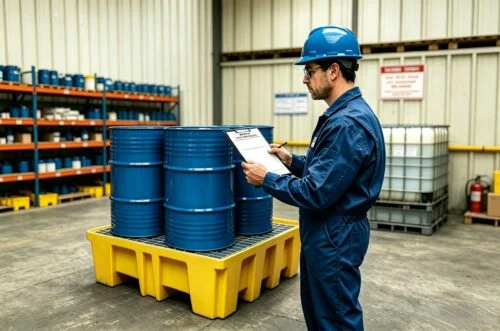
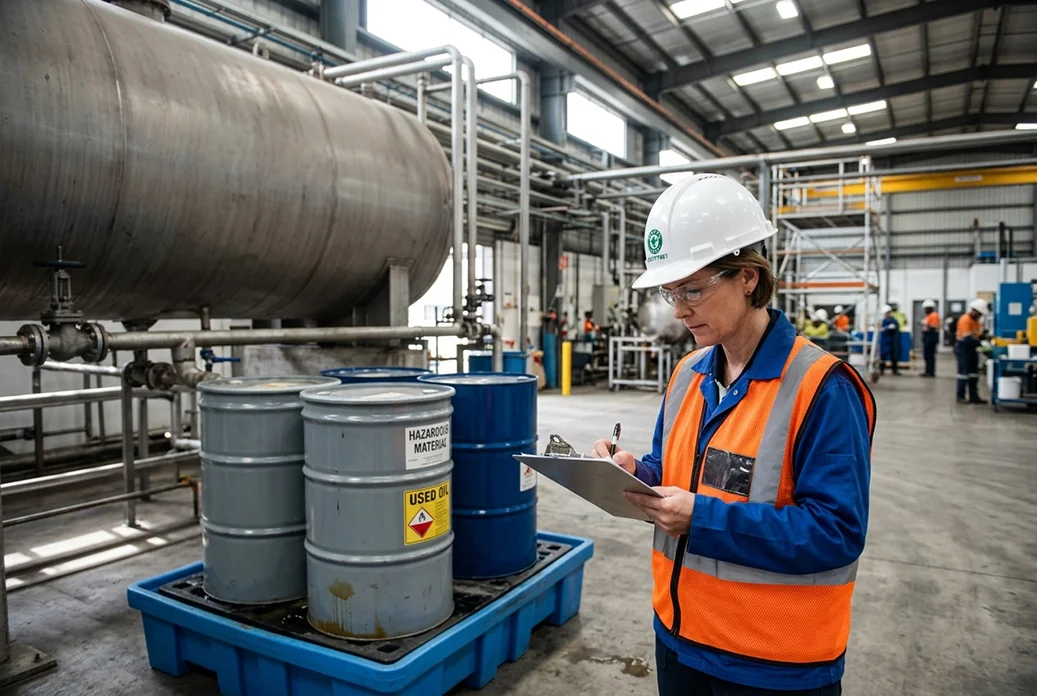
- Conduct a thorough visual assessment for leaks, cracks, or corrosion on all storage tanks, drums, and intermediate bulk containers (IBCs)
- Identify dents or structural damage that may compromise container integrity
- Verify that all lids, caps, and fittings are securely fastened and structurally intact
- Confirm no liquid seepage is present at container seams or connection points
2. Structural Integrity of the Containment System
- Inspect containment berms, spill pallets, and dikes for structural deficiencies, including cracks, holes, or material degradation
- Assess for signs of erosion, ground settling, or damage incurred from heavy equipment operations
- Ensure containment walls and flooring remain intact, with no gaps, loose materials, or structural compromises
- Evaluate areas with high chemical exposure for accelerated wear or material breakdown
3. Verification of Containment Capacity
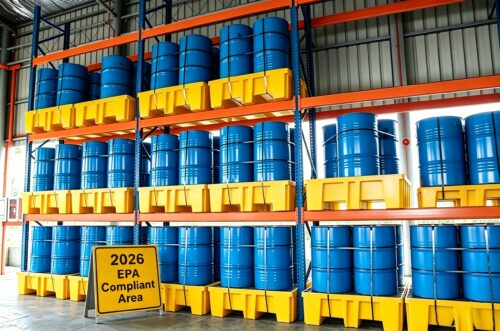
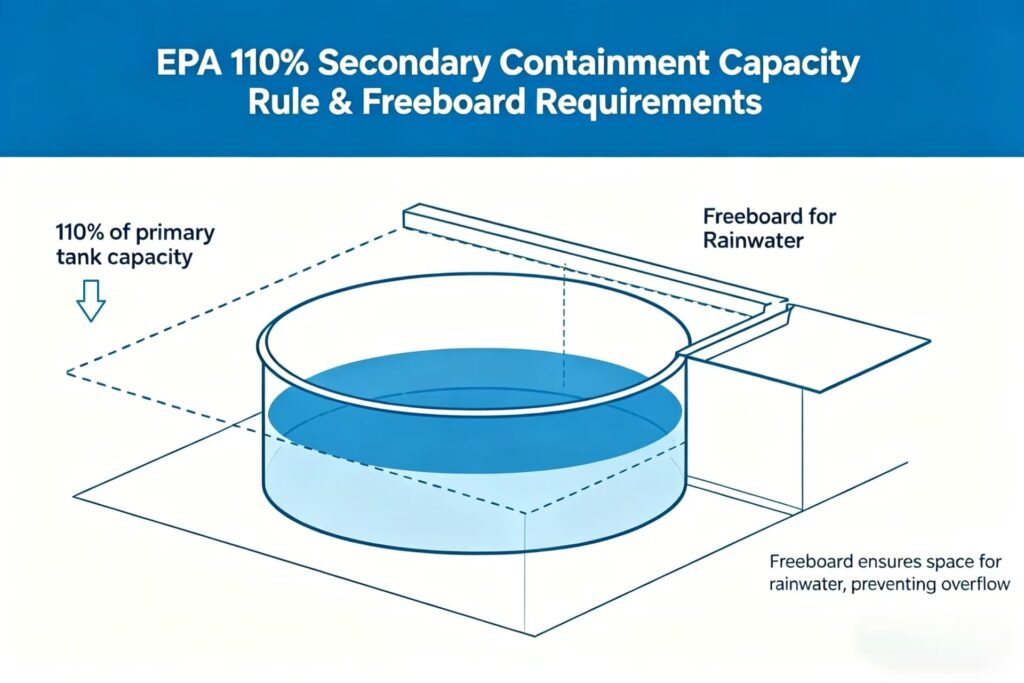
- Confirm the containment system meets the 110% rule, defined as 110% of the volume of the largest individual storage container within the designated area
- Ensure containment capacity has not been diminished by debris accumulation or unauthorized stored items
- Verify that displacement volume—caused by tank support legs, concrete piers, or other fixed structures—has been accounted for in capacity calculations
- Validate that all capacity calculations align with EPA and SPCC regulatory requirements
4. Status of Drainage and Valve
- Ensure all drainage points are closed and properly sealed, except when authorized for specific operational purposes
- Inspect valves for leaks, corrosion, or blockages that may impair functionality
- Confirm valves are clearly labeled and readily accessible for emergency operations
- Conduct functional testing to verify valves operate smoothly and seal effectively when closed
5. Precipitation and Freeboard Clearance
- Verify that freeboard—defined as the vertical space between the maximum liquid level and the top of the containment structure—is sufficient to accommodate a 25-year, 24-hour storm event
- Remove debris (including leaves, dirt, and trash) that may obstruct drainage or reduce effective containment capacity
- Inspect outdoor containment areas for standing water, which may indicate drainage issues or capacity limitations
- Ensure stormwater does not accumulate or overflow within the containment system, which could compromise its integrity
6. Chemical Compatibility Verification
- Confirm that containment materials are chemically compatible with the hazardous substances being stored
- Inspect for signs of chemical-induced damage, including discoloration, material swelling, or structural breakdown
- Utilize chemical compatibility test strips when storing unknown liquids to ensure material suitability
- Verify that spill pallets and containment berms are rated for use with the specific chemicals stored on-site
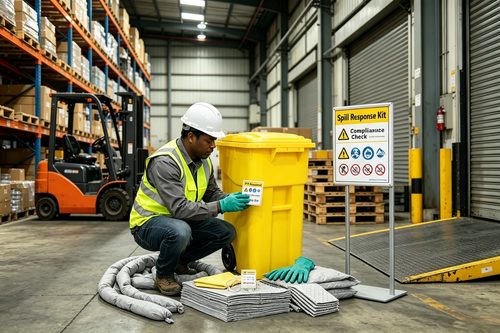
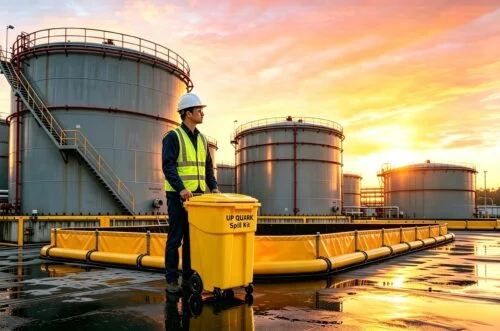
7. Accessibility of Spill Response Kit
- Verify that spill response kits are clearly visible, easily accessible, and unobstructed at all times
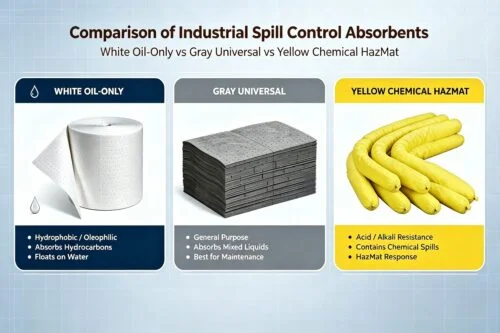
- Inspect kits to ensure they are fully stocked with required components, including absorbents, personal protective equipment (PPE), and neutralizing agents
- Confirm all kit components are within their designated expiration dates and in serviceable condition
- Validate that personnel have received proper training on the location and operation of spill response kits
8. Cleanup of Area
- Remove all debris, spilled liquids, and unused materials from containment areas to maintain capacity and prevent contamination
- Ensure forklift aisles and access routes adjacent to containment systems remain clear of obstacles
- Clean and remove any chemical residues that may cause corrosion or structural damage to the containment system
- Dispose of all waste materials in accordance with EPA and OSHA guidelines and regulatory requirements
9. Labeling and Signage
- Verify that containment areas are clearly labeled with appropriate signage, including hazardous material designations and safety warnings (e.g., "No Smoking")
- Ensure all signage is visible, legible, and free from fading or physical damage
- Confirm that labels on storage containers accurately match the hazardous substances being stored
- Promptly install missing signage or replace damaged signs to maintain regulatory compliance and safety awareness
10. Documentation and Log Maintenance
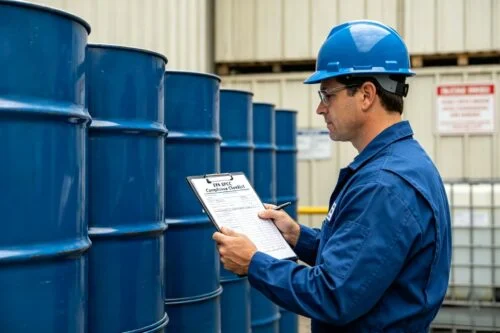
- Record inspection dates, findings, and any corrective actions or repairs performed in a formal inspection log
- Maintain inspection logs on-site for a minimum of three years to comply with EPA/SPCC audit requirements
- Document all personnel training related to secondary containment inspection procedures and spill response protocols
- Update inspection logs immediately whenever modifications or upgrades are made to the secondary containment system
In Conclusion
Proactive inspection and maintenance of secondary containment systems are far more cost-effective than reactive spill cleanup and regulatory remediation. Routine implementation of this 10-point checklist can prevent hazardous spills, avoid costly EPA fines, and protect facility infrastructure, personnel, and surrounding communities. Adherence to this protocol ensures operational readiness, maintains regulatory compliance, and mitigates the risk of costly non-compliance findings during EPA/SPCC audits.
If inspection activities identify failing components or non-compliant elements, prompt action is essential. Upgrade to SPCC-compliant industrial spill pallets or containment berms from Upquark.
References
- EPA SPCC Applicability and Threshold Requirements.
- Valuation of Crude Oil Spills in Transportation Incidents (USDOT PHMSA)
- EPA SPCC Secondary Containment Specifications.
- OSHA Standard 29 CFR 1926.152 (Flammable Liquids Storage).
- OSHA Standard 29 CFR 1910.120 (Hazardous Waste Operations and Emergency Response)