How to Safely Clean and Decontaminate a Spill Pallet After a Leak
Written by

Chem Fox
Publish on 03 May, 2026

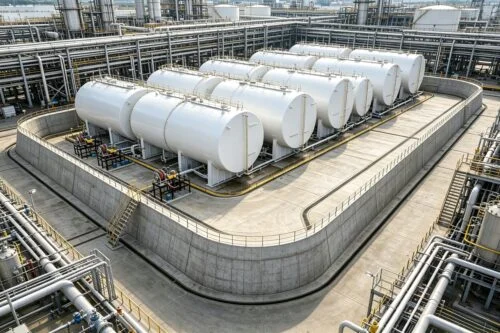
Spill pallets play a critical role in maintaining facility compliance with Environmental Protection Agency (EPA) and Spill Prevention, Control, and Countermeasure (SPCC) regulations. However, a leakage incident can transform this essential safety equipment into a potential hazard if not subjected to proper cleaning and decontamination procedures. Improper spill management poses significant risks to personnel safety, environmental integrity, and organizational compliance.
The consequences of non-compliance are substantial:
- Approximately 30% of chemical-related incidents stem from inadequate storage practices.
- Furthermore, EPA fines for the absence or non-compliance of required SPCC Plans can reach $68,445 per day per violation.
In regulatory compliance, this guide outlines a systematic process for spill pallet safe cleaning and decontamination
Step 1: Immediate Containment and Risk Assessment
Prior to initiating cleanup activities, it is imperative to contain the leak and conduct a comprehensive risk assessment. Premature engagement in cleanup operations without adequate preparation may exacerbate the hazard.
- Identify and address the leak source: Conduct a thorough inspection to determine if the spill originates from a damaged drum, loose fitting, or cracked container. Where feasible, implement immediate measures to halt the leak (e.g., tightening a cap or relocating a damaged drum to a secure area).
- Review the Safety Data Sheet (SDS): Obtain and review the SDS for the spilled liquid. The SDS provides critical information regarding proper handling procedures, required Personal Protective Equipment (PPE), and inherent hazards (e.g., flammability, toxicity, or corrosiveness).
- Conduct Volatile Organic Compound (VOC) testing: Utilize a VOC detector to assess air quality within the affected area. If VOC levels exceed safe thresholds, evacuate personnel immediately and enhance ventilation before resuming any cleanup activities.
- Don appropriate PPE: At a minimum, personnel must wear chemical-resistant gloves, safety goggles, and a lab coat. For hazardous material spills, additional protective equipment—such as a face mask or respirator—must be worn in accordance with SDS guidelines.
Step 2: Extracting the Spilled Liquid
Once the area has been deemed safe for entry, the spilled liquid must be extracted from the spill pallet’s sump. This step is critical to eliminating the primary hazard prior to initiating decontamination.
Adhere to the EPA 110% Rule: Spill pallets are engineered to accommodate 110% of the volume of the largest container stored thereon—a widely accepted industry best practice for SPCC compliance. This additional capacity provides sufficient time to extract spilled liquids without risk of overflow. For detailed guidance on calculating secondary containment capacity, refer to the official resource: “How to Calculate Secondary Containment Capacity: The 110% Rule Explained”
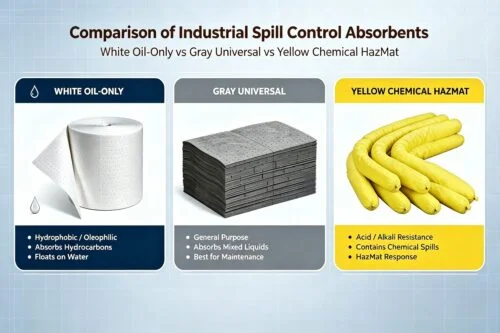
Utilize UPQUARK Absorbents: For residual liquids in the sump, deploy high-capacity absorbent pads, rolls, or socks. These specialized products effectively encapsulate liquids to prevent further spread. Select the appropriate absorbents based on the nature of the spill:
- White pads: Designed for oil-only spills, as they repel water and selectively absorb oil-based fluids.
- Gray pads: Suitable for universal spills, including oils, coolants, and water-based fluids.
- Yellow pads: Intended for hazardous or unknown chemical spills, serving as a visual safety warning.
Remove and contain saturated absorbents: Once absorbents have reached maximum saturation, they must be carefully collected and placed in a sealed hazardous waste container. Under no circumstances should saturated absorbents be left in the sump.

Step 3: The Decontamination and Scrubbing Process
Following the extraction of spilled liquids, the spill pallet must be thoroughly scrubbed and decontaminated to eliminate all residual materials. Residues left behind may cause pallet corrosion or pose long-term hazards for future storage operations.
- Select the appropriate cleaning agent: Utilize a neutralizer or cleaning solution recommended by the SDS for the specific spilled material. For oil-based spills, a degreaser is recommended; for chemical spills, a compatible neutralizing agent (e.g., baking soda for acidic substances) should be used.
- Scrub all surfaces comprehensively: Use a stiff-bristled brush to scrub the sump, walls, and corners of the pallet. Special attention must be given to cracks and crevices, where residues are likely to accumulate.
- Rinse thoroughly: Rinse the pallet with clean water to ensure complete removal of all cleaning agents and residual materials. All rinse water must be collected in a sealed container—under no circumstances should it be discharged into drains (see Step 4 for proper disposal protocols).
- Dry the pallet completely: Allow the pallet to air dry fully or use a clean, lint-free cloth to accelerate the drying process. A completely dry pallet prevents mold growth and ensures it is fit for reuse.
Step 4: Proper Disposal and Documentation
Proper waste disposal and detailed documentation are essential components of SPCC compliance. Failure to adhere to these requirements may result in EPA fines and legal ramifications.
Dispose of hazardous waste in accordance with regulations: Saturated absorbents, rinse water, and all other contaminated materials must be disposed of as hazardous waste. All disposal activities must comply with local, state, and federal regulations, as well as SDS guidelines. Incineration of used absorbents is prohibited, as it may release toxic byproducts.
- Maintain comprehensive cleanup documentation: A detailed record of the spill and subsequent cleanup must be retained, including:
- Date and time of the leak incident
- Type and volume of liquid spilled
- Specific cleanup procedures implemented
- Disposal method, including the name of the waste hauler and manifest number
Update the SPCC Plan: If the leak was caused by equipment failure (e.g., a damaged drum), the facility’s SPCC Plan must be updated to reflect this issue. The EPA mandates that SPCC Plans remain current with all site-specific conditions.
Preventing Future Leaks: Upgrading Your Secondary Containment
While effective cleanup is critical, proactive prevention of leaks is paramount. Upgrading secondary containment systems can significantly reduce the risk of future spill incidents.
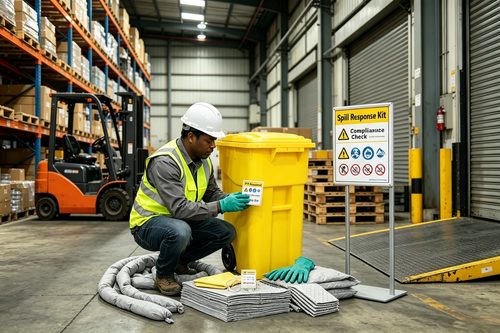
- Stock UPQUARK Spill Kits: Maintain fully stocked spill kits on-site to enable immediate response to leaks. These kits include absorbents, PPE, and disposal tools, all of which meet EPA and SPCC standards. UPQUARK Rapid-response spill kits ready-to-deploy design ensures rapid containment, minimizing hazards and operational disruption..
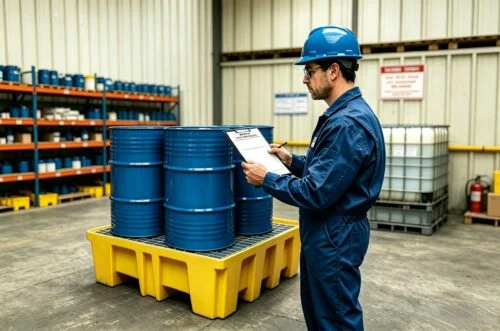
- Conduct monthly spill pallet inspections: Inspect spill pallets regularly for cracks, corrosion, or structural damage. Pallets that are worn or damaged must be replaced promptly, as they will not provide adequate containment.
- Provide comprehensive personnel training: Ensure all staff receive training on spill kit deployment, SDS interpretation, and proper cleanup procedures. The EPA requires annual SPCC training with documented certifications for all relevant personnel.

FAQs
Q: Can you reuse absorbent pads after a chemical spill?
No, absorbent pads should not be reused following a chemical spill. Absorbents are designed to encapsulate hazardous materials, and reuse may result in contamination spread or personnel exposure to toxins. All used absorbents must be disposed of as hazardous waste.
Q: How do I properly dispose of rinse water from a spill pallet?
Rinse water from spill pallet cleanup is likely to be contaminated and must be collected in a sealed container. It should be disposed of as hazardous waste in compliance with regulatory requirements. Discharging rinse water into drains, storm sewers, or onto the ground is prohibited, as it violates EPA regulations and causes environmental harm.
Q: What is the required containment capacity for a 55-gallon drum spill pallet?
For a single 55-gallon drum, the minimum secondary containment capacity is 110% of the drum’s volume—a widely recognized industry best practice for SPCC compliance. This requires a spill pallet with a sump capacity of at least 60.5 gallons. For multiple drums stored in the same area, the containment system must hold the greater of 110% of the largest drum’s volume or 10% of the total volume of all drums
References:
1.Strategies for Safe and Secure Chemical Management (30% of incidents linked to improper storage)
2.Everything You Need to Know About SPCC Plans ($68,445 daily fines)