SPCC Compliance Guide 2026: Master EPA Rules & Facility Requirements
Written by

Chem Fox
Publish on 28 May, 2026

Is your facility prepared for the EPA’s 2026 SPCC crackdowns?
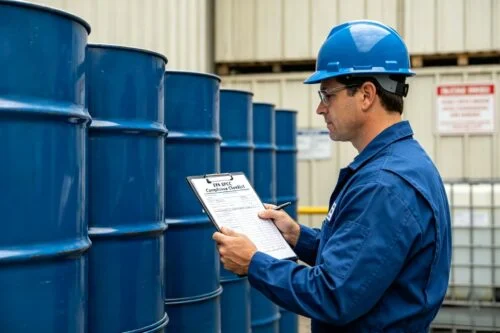
EPA SPCC is the short name for Environmental Protection Agency Spill Prevention, Control, and Countermeasure. The Spill Prevention, Control, and Countermeasure (SPCC) rule is a mandatory EPA standard for any industrial facility that stores, handles, or transfers oil. With regional enforcement tightening and administrative penalties increasing in 2026, keeping your SPCC protocols updated is critical to avoiding costly regulatory fines, operational shutdowns, and environmental liabilities.
This full-scale guideline systematically interprets following points and helps industrial facilities maintain continuous SPCC compliance:
- Official EPA provisions
- Facility applicability rules
- Core plan formulation requirements
- Standardized secondary containment specifications and emerging enforcement risks
What Is the SPCC Rule?
The SPCC Rule is a federal environmental regulatory framework established pursuant to the U.S. Clean Water Act (CWA). Initially promulgated in 1973, the regulation aims to prevent petroleum and oil-related pollution of U.S. navigable water bodies, serving as a standardized mandatory risk prevention mechanism for industrial facilities engaged in oil and petroleum product operations.
The fundamental regulatory objective of the SPCC Rule is to prevent, control, and mitigate the discharge of oil pollutants into navigable waters and adjacent shoreline areas. It is a proactive risk control model rather than post-incident spill response measures.
Does Your Facility Need an SPCC Plan?
SPCC Plan formulation is not required for all industrial facilities. The EPA has established clear quantitative and qualitative threshold criteria to define regulated entities based on on-site oil storage capacity, operational attributes, and geographical environmental risk factors. Only facilities that meet the prescribed applicability conditions are subject to mandatory SPCC regulatory supervision.
- Non-transportation fixed facilities: The regulation applies exclusively to stationary industrial sites, excluding mobile transportation equipment including motor vehicles, railway carriers, and marine vessels.
- The Threshold Rule:
- 1,320-gallon aboveground storage threshold: Facilities with an aggregate aboveground oil storage capacity exceeding 1,320 gallons (calculated based on individual containers of 55 gallons or larger) are obligated to develop and implement a formal SPCC Plan.
- 42,000-gallon underground storage threshold: Sites equipped with fully buried oil storage systems with a total capacity exceeding 42,000 gallons fall within the scope of SPCC regulatory management.
- Reasonable discharge risk criterion: Any facility with verifiable potential for oil spill migration to navigable waters, wetlands, or adjacent shoreline areas is subject to mandatory SPCC compliance requirements.
- Covered Oil Types: SPCC regulatory provisions cover all petroleum and non-petroleum oil-based substances, including but not limited to gasoline, diesel fuel, industrial lubricants, hydraulic fluids, fuel oil, vegetable oil, animal fat, and other combustible hydrocarbon liquids commonly stored and utilized in industrial production and operation scenarios.

The Cost of Non-Compliance: 2024–2026 EPA Enforcement Trends
Violations of SPCC and Clean Water Act provisions rank among the most frequently enforced environmental regulatory violations by the EPA. In recent years, the authority has continuously strengthened law enforcement intensity, resulting in rising penalty standards for non-compliant acts. Non-compliance with SPCC requirements will trigger comprehensive adverse impacts on facilities, including regulatory penalties, operational interruptions, pollution remediation costs, and irreversible negative corporate reputational effects.
- In the fourth quarter of 2024, the EPA concluded formal enforcement proceedings against 24 institutional entities for violations of Clean Water Act and SPCC provisions, imposing a cumulative total of $724,270 in civil penalties. (Source: EHS Leaders)
- From late 2025 to early 2026, the EPA initiated aggressive enforcement sweeps in Region 6 following public criticism over the August 2025 Smitty's Supply facility explosion in Louisiana, highlighting the critical nature of SPCC enforcement.(Source: JD Supra, May 2026)
Full Scope of Non-Compliance Impact
- Daily accrued civil penalties: Unrectified SPCC violations may incur continuous daily fines ranging from thousands to tens of thousands of U.S. dollars.
- Pollution remediation expenditures: On-site cleanup and environmental restoration costs for oil spills typically exceed $10,000 per gallon, exclusive of professional hazardous waste disposal fees.
- Operational suspension losses: Regulatory mandatory shutdown orders and corrective action requirements will disrupt normal production schedules and trigger economic losses.
- Corporate reputational impairment: Recorded environmental violations and public spill incidents will undermine corporate credibility among stakeholders and damage brand image.
| SPCC COMPLIANT NOT SURE IF YOUR FACILITY MEETS 2026 SPCC STANDARDS? Contact Our Compliance Engineers and we will conduct an assessment for you. | START NOW → |
Core Mandatory Requirements of a Compliant SPCC Plan
A legally compliant SPCC Plan is a site-specific, fully documented operational file that verifies a facility’s complete capability for oil spill prevention, control, and emergency response. The EPA mandates that all regulated facilities’ SPCC Plans must incorporate the following core components to pass official compliance audits:
- Facility diagram and description of operations: Detailed diagrams marking oil storage areas, container placement, pipeline layouts, drainage systems, and environmentally sensitive risk points.
- Quantitative spill risk analysis: Documented assessment of potential spill parameters, including discharge volume, flow direction, spill rate, and corresponding environmental impact scenarios.
- Standardized preventive operational procedures: Formal operating specifications for safe oil storage, transfer, and dispensing processes to minimize equipment leakage and spill risks.
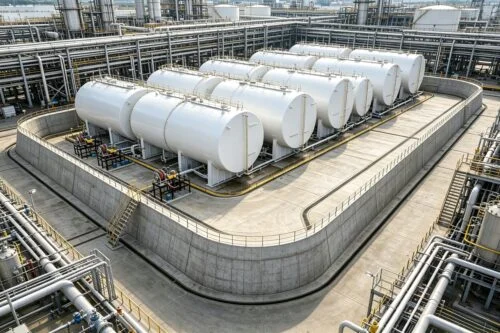
- Engineered risk control facilities: Qualified physical prevention and containment equipment, with compliant secondary containment systems serving as the core safeguard for all bulk oil storage units.
- Standardized emergency response countermeasures: Formal protocols covering on-site spill containment, pollution cleanup, risk mitigation, regulatory reporting, and post-incident site environmental restoration.
To sustain continuous regulatory compliance, facilities are required to conduct a routine 10-point routine inspection of containment systems to identify equipment aging, structural damage, or capacity insufficiency risks in a timely manner.
Secondary Containment: The Backbone of SPCC Compliance
If you have read our article before you will understand the basics of secondary containment. The EPA classifies compliant secondary containment systems into two standardized categories with differences between sized and general secondary containment.
General vs. Sized Secondary Containment
- General Secondary Containment: Designed for low-risk and small-scale operational scenarios, this type of containment is applicable for intercepting minor equipment drips, micro-leakages, and conventional operational seepage. It is suitable for temporary transfer stations, small-capacity containers, and frequently relocated equipment with low large-scale spill risk.
- Sized (Specific) Secondary Containment: Mandatorily deployed for bulk storage tanks, large intermediate bulk containers (IBCs), and high-volume oil handling facilities. Engineered with standardized structural capacity to fully contain maximum potential spill incidents and prevent large-area environmental contamination.
The EPA 110% Capacity Rule
How to calculate secondary containment capacity using the 110% rule? This criterion is the universal industry standard governing the capacity design of all sized secondary containment systems for SPCC compliance:
- Single container scenario: The effective containment capacity shall reach 110% of the volume of the single largest container, covering full discharge volume and reserved margin for minor liquid overflow.
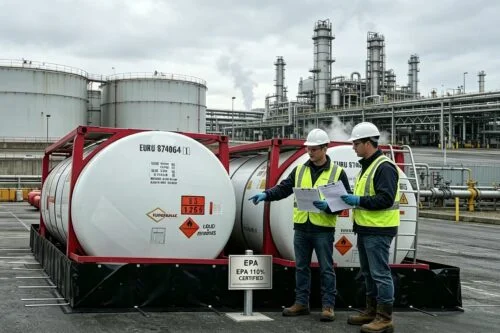
- Multiple containers scenario: The containment capacity shall adopt the higher value between 110% of the largest container’s volume or 10% of the total aggregate storage volume of all containers within the containment zone.
Outdoor deployed secondary containment systems shall be equipped with additional freeboard capacity to withstand rainfall accumulation under the 25-year, 24-hour extreme precipitation standard, effectively eliminating stormwater overflow and secondary pollution risks under severe weather conditions.
Upquark Equipment Solutions for Immediate
Adoption of EPA-qualified secondary containment equipment matching facility risk levels is critical to eliminating compliance audit failures and regulatory enforcement risks. All Upquark product lines fully comply with 40 CFR 112 SPCC regulatory standards and OSHA operational specifications, supporting industrial facilities in achieving immediate and sustained compliance:
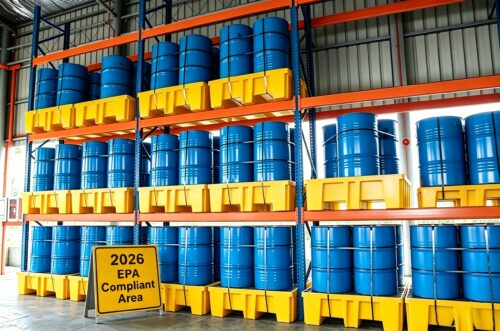
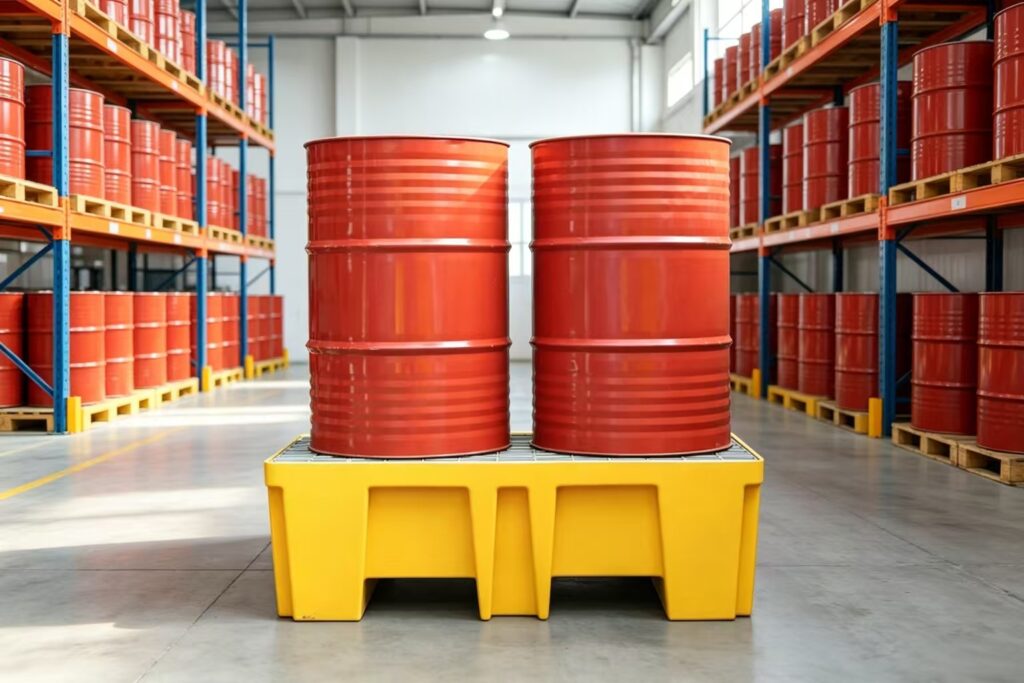
- Spill Containment Pallets:Heavy-duty spill containment pallets provide reliable leak-proof secondary containment for standard 55-gallon oil drums. Manufactured with corrosion-resistant structural materials and integrated sump design, the pallets fully satisfy the EPA 110% capacity compliance standard for indoor and outdoor fixed storage scenarios, applicable to petroleum, chemical, and lubricant storage areas.
- Flexible Spill Containment Berms:Tool-free portable flexible spill containment berms provide standardized sized secondary containment for bulk storage tanks, IBCs, and mobile operating equipment. Featuring terrain adaptability and rapid deployability, the berms are applicable to temporary storage sites, construction operation fields, and large-scale bulk storage facilities with full SPCC compliance requirements.

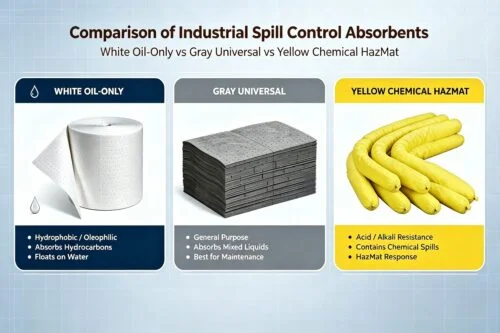
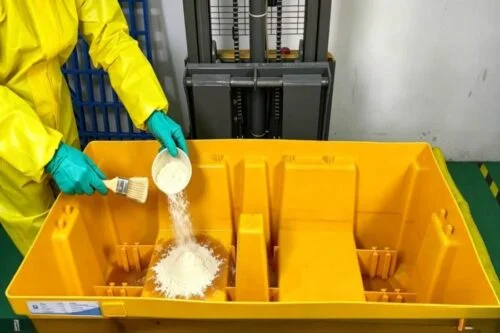
- Spill Kits & Absorbent Solutions:Professional emergency chemical and oil spill kits support rapid disposal of on-site minor leakage and spill incidents, fulfilling SPCC-mandated emergency mitigation requirements. Customized for oil and chemical hazardous liquid cleanup scenarios, these products complete the full-process spill response system to ensure comprehensive regulatory compliance.
Frequently Asked Questions
How often must an SPCC plan be reviewed?
The EPA mandates a five-year formal review cycle for all SPCC Plans of regulated facilities. Unscheduled immediate updates are required in the event of significant changes to facility operational modes, storage capacity, equipment layout, or spill risk profiles to sustain continuous compliance validity.
Can I self-certify my SPCC plan?
Yes. You can self-certify your SPCC plan if facilities with historical environmental violation records are required to obtain professional engineer (PE) certification to verify the authenticity, accuracy and compliance of SPCC documentation.