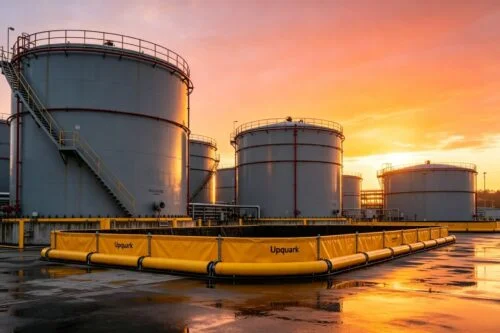
Oil & Gas SPCC Compliance: Secondary Containment Guide
Written by

Chem Fox
Publish on 30 Jun, 2026

Introduction: The High Stakes of Oil & Gas Secondary Containmen
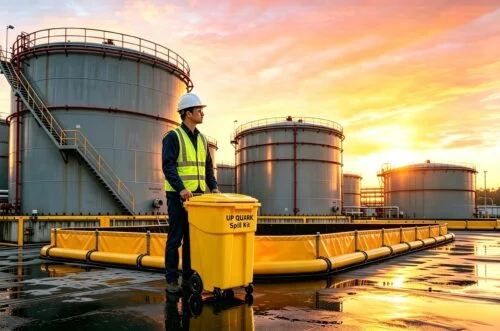
Refineries and oil terminals handle massive volumes of hazardous petroleum liquids daily, making spill prevention a core operational and regulatory priority. Even minor containment failures can trigger severe consequences, including costly environmental remediation, prolonged facility downtime, regulatory penalties, and harm to local ecosystems and communities. According to data from the Pipeline and Hazardous Materials Safety Administration, pipeline and storage-related incidents continue to impact the oil and gas industry annually, with many incidents stemming from inadequate secondary containment and poor on-site risk management.
(Source: PHMSA)
At the core of oil spill prevention for onshore facilities is the EPA’s Spill Prevention, Control, and Countermeasure (SPCC) Plan. For refineries and terminals, secondary containment acts as the last line of defense against accidental oil discharges. It provides a fail-safe barrier to capture leaks, overflows, and spills before hazardous liquids reach surface water, soil, or public infrastructure, ensuring facilities meet federal environmental safety standards and mitigate operational risks.
What Are the EPA SPCC Requirements for Refineries and Terminals?
Enforced under 40 CFR Part 112, the EPA SPCC rule mandates strict spill prevention protocols for facilities that store, process, or transfer bulk oil and petroleum products. The regulation applies to all refineries, terminals, and bulk storage sites with the potential for harmful oil discharges into navigable waters or adjacent shorelines. Compliance requires documented risk assessment, engineered containment systems, and regular operational verification to prevent and mitigate spills.
Facilities must develop, implement, and maintain a formal SPCC Plan, certified by a professional engineer where required, to demonstrate full adherence to federal standards. Key triggering factors that mandate SPCC compliance for refineries and terminals include:
- Bulk storage capacity thresholds: On-site storage of 1,320 gallons or more of aggregate aboveground oil storage, or 42,000 gallons or more of underground oil storage
- Proximity to regulated water bodies: Facility operations within reasonable proximity to navigable waters, wetlands, or federally protected shorelines that could be impacted by oil discharges
- High-risk operational activities: Regular bulk liquid transfer, tanker loading/unloading, temporary frac tank storage, and large-scale chemical and lubricant storage
Reference source: EPA's Discharge Reporting Requirements
Beyond written plans, the SPCC rule requires physical secondary containment infrastructure for all bulk storage containers and high-risk operational zones. Non-compliance results in substantial daily fines, mandatory operational shutdowns, and long-term environmental liability for unaddressed spills.
Understanding the “110% Rule” for Bulk Storage Containers
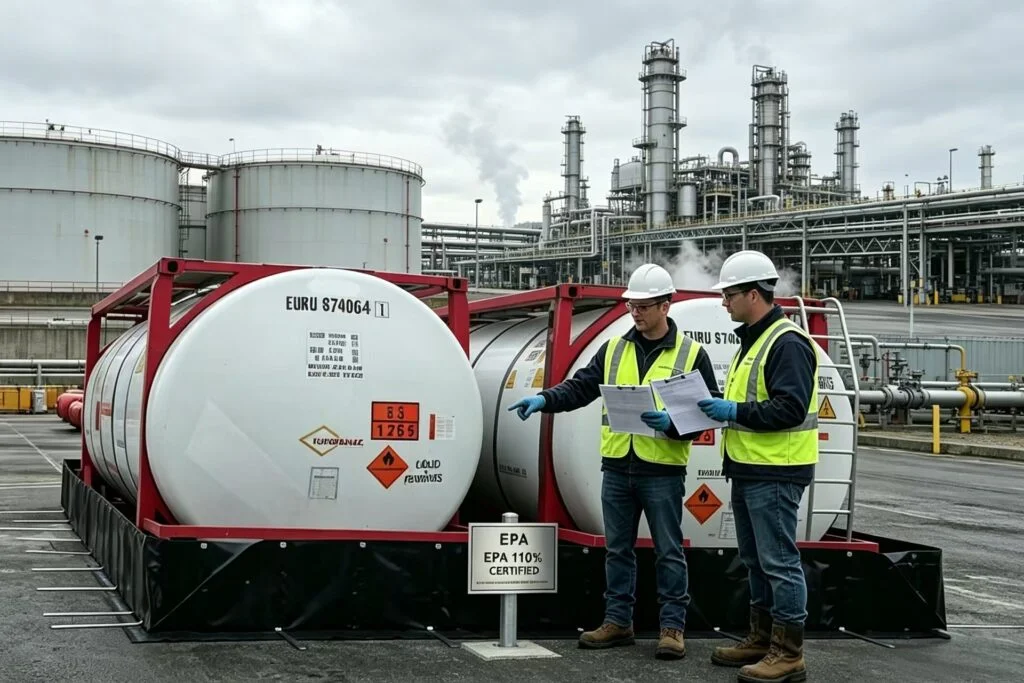
The 110% secondary containment rule is the most critical technical standard for SPCC compliance, and it governs the minimum capacity of all containment systems for bulk oil and hazardous liquid storage. The sized secondary containment standard ensures systems can contain worst-case discharge scenarios such as container overflows, splash during liquid transfer, stormwater accumulation, and minor calculation tolerances.
The calculating secondary containment capacity under the 110% rule as follows:
- Single-container storage: Minimum containment capacity = 110% of the volume of the largest individual tank, drum, or IBC container on-site
- Multiple-container storage zones: Use the greater value between 110% of the largest single container’s volume or 10% of the total volume of all containers in the designated zone
- Outdoor storage adjustment: Outdoor containment systems require additional freeboard capacity to accommodate a 25-year, 24-hour regional storm precipitation event
- Displacement volume adjustment: Factor in space occupied by tank supports, piping, and structural fixtures to calculate effective usable containment capacity

Types of Secondary Containment Systems for Oil & Gas Facilities
Active vs. Passive Containment Systems
Refineries and terminals rely on two primary categories of secondary containment systems to meet SPCC requirements, each suited for distinct operational scenarios:
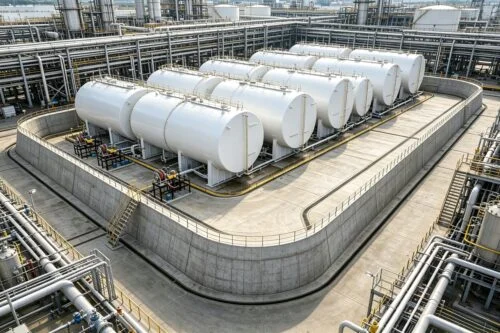
Passive containment systems: Permanent or stationary engineered barriers that provide continuous, automatic spill protection without manual activation. Common examples include containment berms, concrete dikes, retention ponds, and fixed spill pallets. These systems serve as the primary compliance foundation for bulk storage zones and deliver reliable 24/7 risk mitigation.
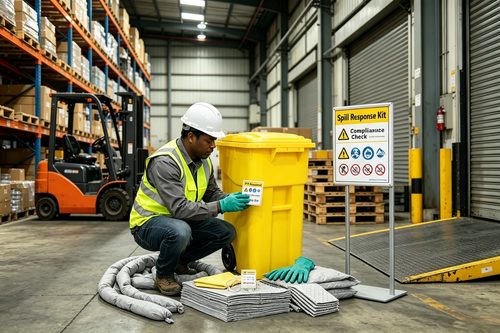
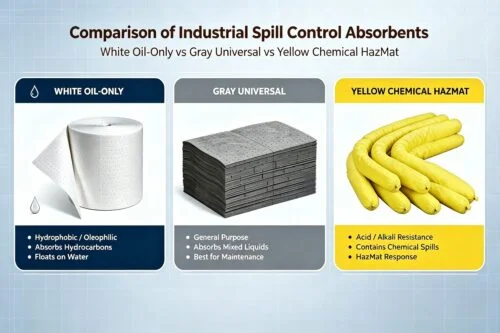
Active containment systems: Response-based tools deployed manually to control and contain spills after a discharge occurs. These include spill response kits, temporary drain covers, absorbent materials, and portable barriers. Active systems complement passive infrastructure to address emergency spills and mobile operational risks.
Spill Containment Berms for Mobile Operations
Heavy-duty spill containment berms are ideal for temporary storage, frac tank deployment, and tanker truck loading/unloading zones at refineries and terminals. Unlike fixed concrete dikes, portable berms offer flexible, scalable compliance for mobile and transient operational activities.
Spill containment berms feature chemical-resistant, durable PVC construction, foldable designs for rapid deployment, and customizable dimensions to fit uneven subgrades and large-scale tank operations. These products are fully compliant with EPA and OSHA secondary containment standards and eliminate gaps in SPCC coverage for non-permanent storage and liquid transfer zones.

IBC and Drum Spill Pallets for Chemical and Lubricant Storage
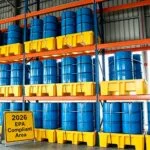
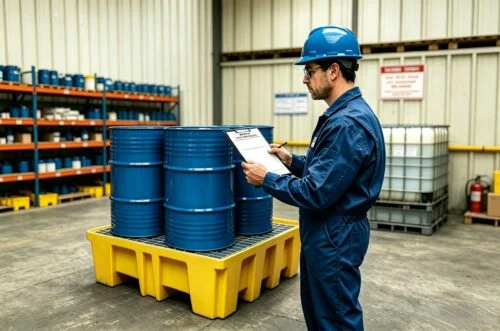
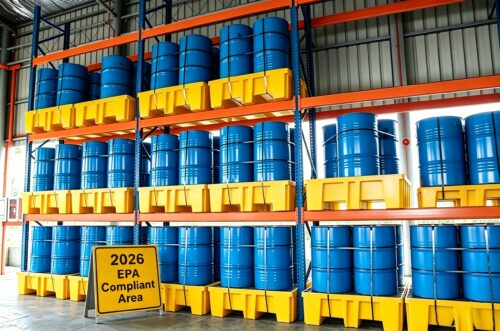
Refineries and terminals store a wide range of corrosive chemicals, lubricants, and flammable petroleum liquids in IBCs and drums, requiring specialized spill pallet solutions tailored to material hazards. TÜV/BV-certified spill pallets are designed for full SPCC compliance, with two core material options:
- Polyethylene pallets: Corrosion-resistant design ideal for storing corrosive chemicals and acidic liquids, preventing material degradation and ensuring long-term containment integrity
- Steel spill pallets: Fireproof, heavy-duty steel construction optimized for flammable and combustible liquids commonly used in refinery operations. Double and triple IBC steel pallet models support multi-container storage with high weight-bearing capacities

Best Practices for Maintaining Your Containment Systems
Proper ongoing maintenance is critical to sustain SPCC compliance and ensure secondary containment systems function reliably during a spill event. Refineries and terminals should implement these actionable best practices:
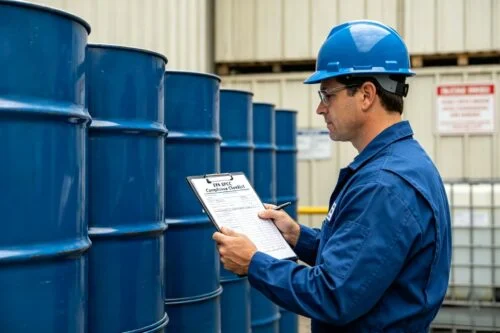
- Conduct routine inspections: Perform weekly visual checks of berms, pallets, and dikes for cracks, tears, corrosion, or debris buildup; complete formal quarterly compliance audits aligned with EPA standards
- Clean and clear containment zones: Regularly remove sediment, stormwater, and residual liquids from containment sumps and berm bases to preserve full design capacity
- Verify capacity compliance: Re-calculate containment volume annually and after any facility layout or storage container changes to maintain 110% rule adherence
- Repair damaged infrastructure promptly: Replace worn pallets, torn berm liners, or cracked concrete barriers immediately to eliminate compliance gaps
- Document all maintenance activities: Retain inspection reports, repair records, and capacity calculation documents for EPA audit verification
- Train on-site teams: Educate operational staff on containment system functionality, spill response protocols, and SPCC compliance requirements
Conclusion & Next Steps
SPCC secondary containment compliance is non-negotiable for refineries and terminals. Inadequate containment infrastructure and poor maintenance lead to costly regulatory fines, environmental contamination, operational downtime, and irreversible reputational damage. The 110% capacity rule, proper selection of passive and active containment systems, and consistent maintenance form the foundation of robust spill prevention and full EPA regulatory adherence.
Navigating complex EPA SPCC regulations does not have to be a guessing game. Fines for inadequate secondary containment can easily reach tens of thousands of dollars per day, but these violations and risks are entirely preventable with engineered, compliant containment solutions.
Don’t Let an SPCC Violation Disrupt Your Operations
Contact Upqrk’s containment experts today to schedule a comprehensive facility assessment. We will help you identify compliance gaps, upgrade your containment systems, and ensure your terminal or refinery is 100% audit-ready for all SPCC and EPA secondary containment requirements.